Guide · General
10 Best Software Route Planning Tools for 2026
Compare 10 software route planning tools on route optimization, dispatch, tracking and pricing, with vendor prices and the dates they were checked.
By the TopToolAdvisor research desk · Updated November 28, 2026 · 17 min read
A dispatcher has several hundred addresses in a spreadsheet, and a driver has just reported a missed delivery window. The immediate problem is dispatch, not finding a shorter route. A fleet handling delivery windows and proof of delivery needs live tracking. A sales rep scheduling customer visits needs a different tool. Start with the operational job.
These ten tools fall into practical groups: Onfleet and OptimoRoute for team dispatch with live tracking; Route4Me and Descartes Route Planner for complex rule-based fleets; RoadWarrior and MyRouteOnline for solo or occasional routing; Badger Maps for field sales visits; and Mapline for routing with territory mapping. Spoke Dispatch serves courier teams with stop-volume pricing, while Routific prices by order volume.
Compare costs using the unit each vendor bills: drivers, orders, stops, address credits or users. Multiply the applicable rate by your own volume before comparing totals. A starting price alone does not show what your operation will pay.
Research and Markets valued the global route optimization software market at USD 10.3 billion in 2025 and forecasts USD 33.5 billion by 2034. A 2025 survey of 521 US transport and shipping professionals reported that 51% of logistics companies had implemented route-optimization software, the most widely adopted technology category measured in that survey (e-commerce.news).
Prices below use vendors' published starting figures where available; Route4Me, Mapline and Descartes Route Planner require sales quotes. Spoke Dispatch's cited figure comes from third-party references rather than a published vendor price. Each product section explains what its pricing includes so you can compare the relevant billing units.
Table of Contents
- 1. OptimoRoute
- 2. Routific
- 3. Route4Me
- 4. Onfleet
- 5. Spoke Dispatch
- 6. Badger Maps
- 7. MyRouteOnline
- 8. RoadWarrior
- 9. Mapline
- 10. Descartes Route Planner
- Route planning software compared by optimization, dispatch, tracking and published starting price
- Shortlist Two Route Planners and Price Them on Your Own Volume
1. OptimoRoute
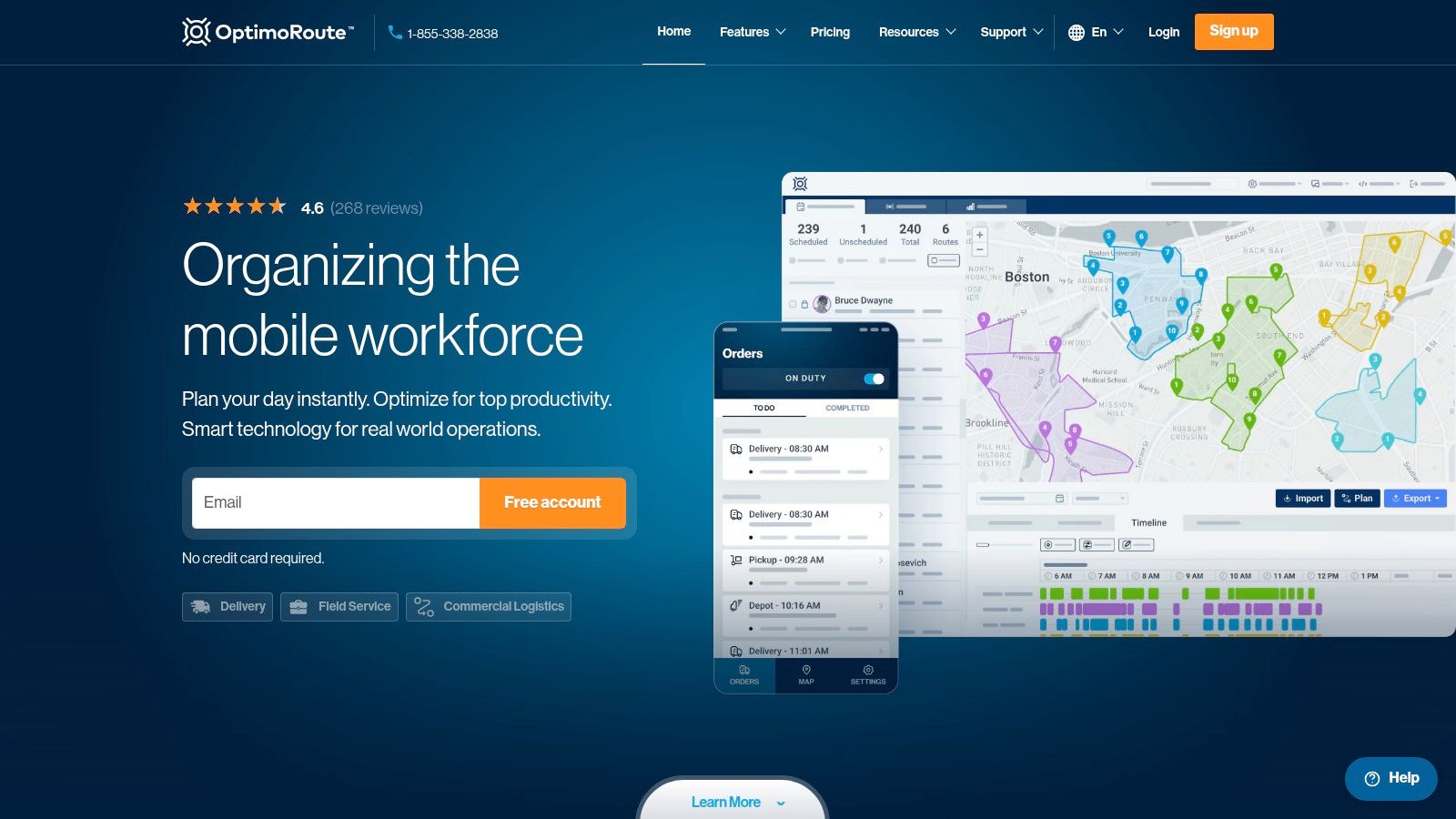
A five-van crew that replans when a stop runs late needs the route and the driver app in one product. OptimoRoute is the tool to price first for that job. It builds the day's order sequence, pushes it to the driver, and shows live tracking and live ETAs as the day slips.
Published rates are $35.10 per driver per month on Lite and $44.10 per driver per month on Pro, both on annual billing, with a 30-day free trial (OptimoRoute).
Cost is linear. Ten drivers on Lite is $351 a month. The same ten on Pro is $441 a month. A seasonal driver pays the full seat, not a reduced rate, so a peak week costs the same per person as a quiet one.
Where Lite stops and Pro starts
Lite plans up to 700 orders at once. Pro plans up to 1,000. Proof of delivery, customer feedback, analytics and weekly planning sit in Pro only. If the stop needs a signature at the door, the Lite quote is the wrong number. The published feature list also includes a Web Service API, route exports and route history.
- Driver mobile app: stop details and navigation for the person on the road.
- Live tracking and ETAs: planned sequence against actual progress.
- Custom requirements: anything outside the published tiers goes to a sales conversation.
Peak-month rule: price the plan you'll run in December, not the one that fits a quiet Tuesday.
NextBillion.ai, citing Future Market Insights, puts cloud-based route optimization solutions at an estimated 72.4% of market revenue in 2025. These per-driver plans follow that model: the planner and the driver app run in the vendor's cloud, so you are not standing up a server before the first route.
2. Routific
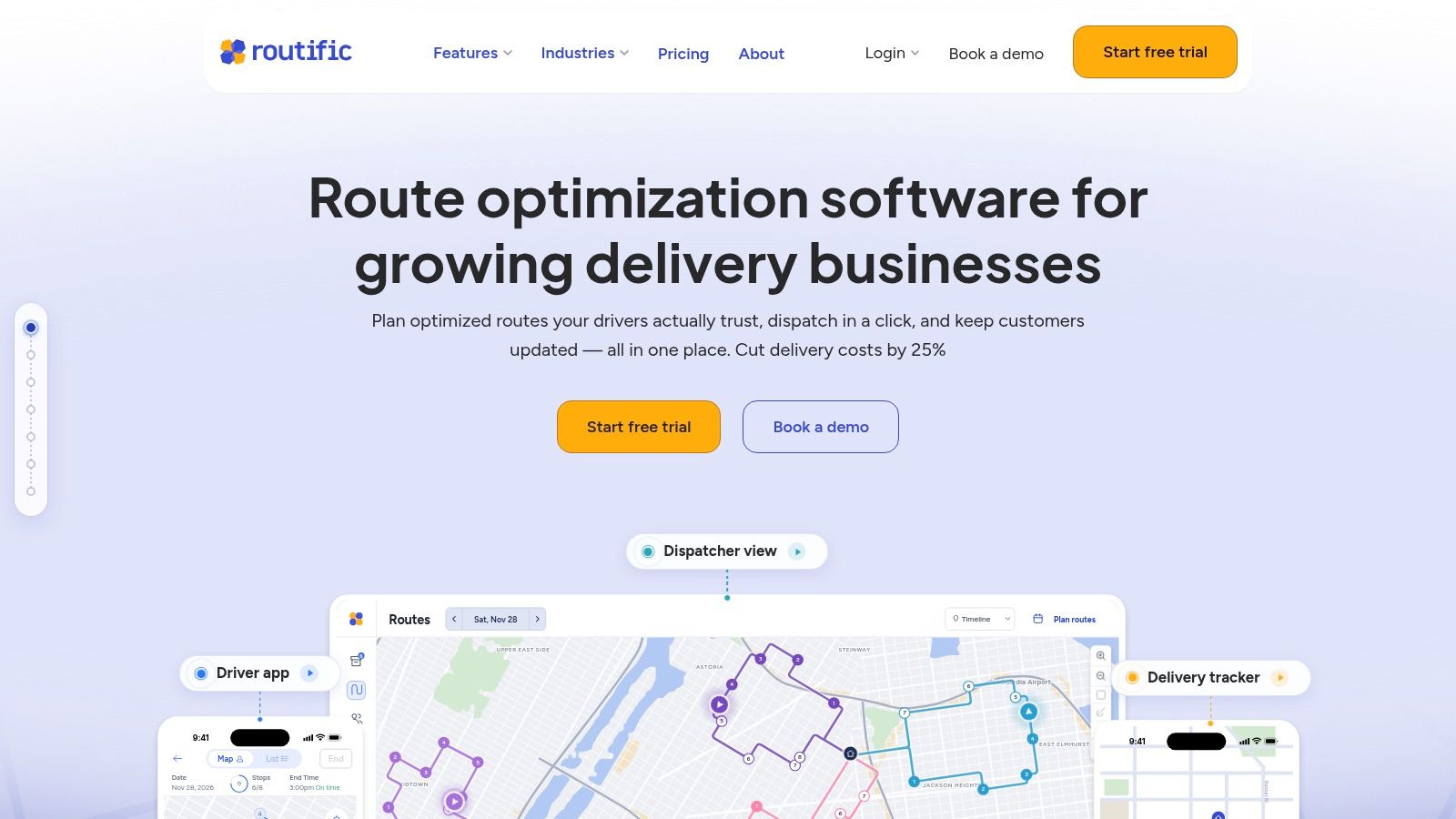
A shop with three vans on Monday and six on Saturday still pays one Routific bill if the scheduled order count stays in the same band. Routific bills order volume, not driver seats, so extra vehicles on a busy day do not raise the software line.
The free plan covers 100 orders a month. The paid plan is listed at $150 per month for up to 1,000 orders (Routific). Divide that fee by the orders you schedule. At the 1,000-order ceiling the rate is 15 cents an order. Closer to the free cap, the same $150 buys far fewer stops, so the paid plan only earns its fee near the top of the band. Past the published bands, pricing leaves self-serve and goes to a vendor quote.
Optimization uses delivery time windows, vehicle capacities and driver shifts. The driver app shows stop details and hands off to turn-by-turn navigation. Proof at the door is a photo, signature, barcode or note. Customers get live driver tracking and an ETA. Order intake can come from Shopify, Zapier, an API or webhooks.
The add-on to price separately
SMS notifications sit outside the $150 plan. They are the charge most likely to show up on the first invoice after a trial that never included them. Ask for that rate before you treat the published plan price as the full monthly cost.
More drivers do not add a seat fee. More orders do. A growing delivery team gets cheaper per head. A growing order book gets more expensive, and a business above the volume bands loses the published price entirely.
3. Route4Me
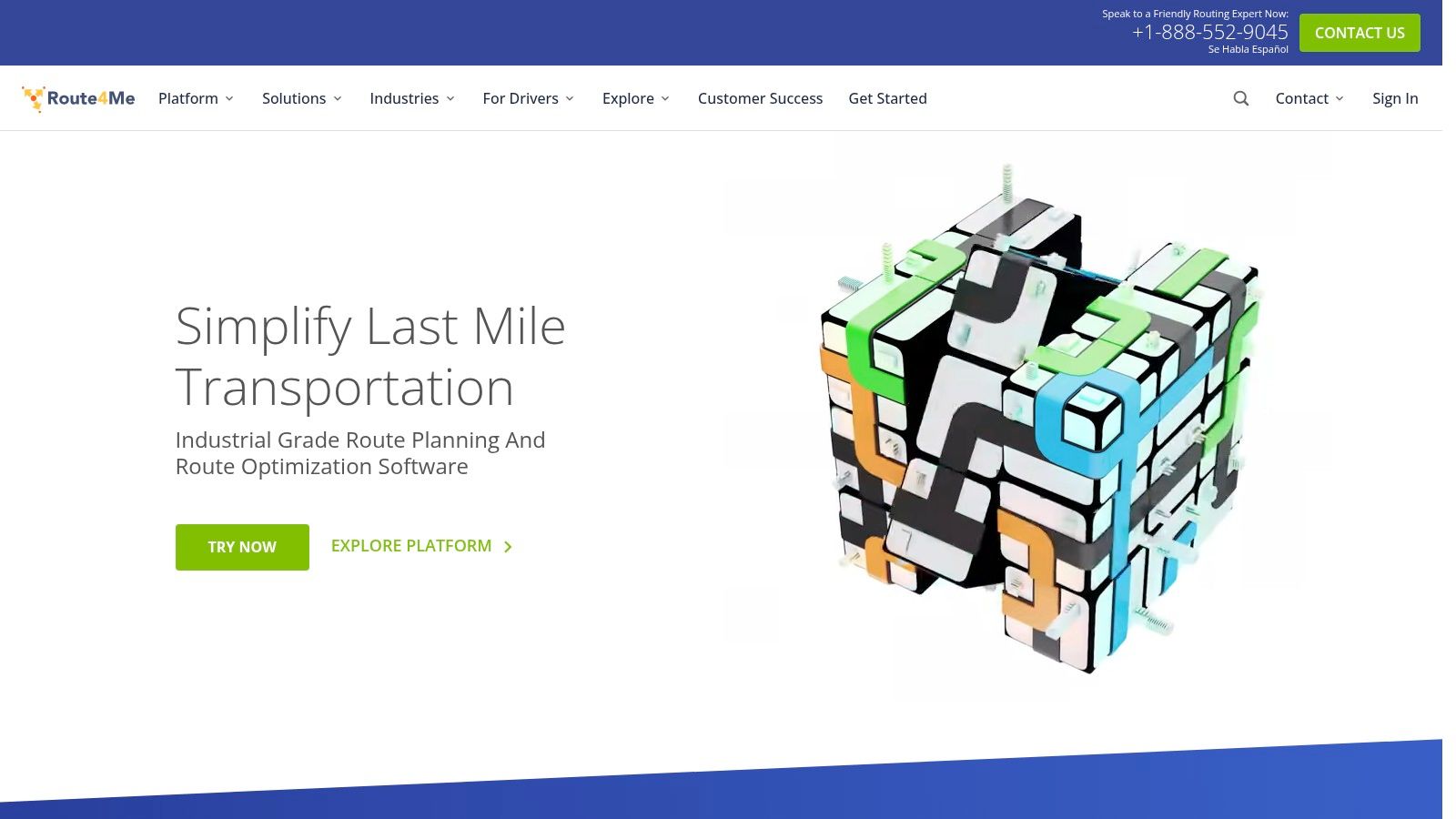
Route4Me is for the operation where the rules are the hard part: several facilities, mixed vehicles, driver restrictions and workflows that don't fit a template. It combines route planning, optimization, dispatch and route monitoring, with extra capability sold as packages and add-ons, plus driver navigation and proof of delivery.
Constraint count is what makes those rules expensive to solve. DataIntelo's fleet routing software analysis notes that for fleets exceeding 50 vehicles with multiple delivery windows, the number of possible combinations can exceed the number of atoms in the universe, which is why vendors rely on heuristics, metaheuristics and mathematical optimization instead of testing every option.
Solver quality shows up in published benchmarks. Recent academic work on vehicle routing with delivery options tested a neighborhood-based matheuristic on 120 small and 120 large instances, reaching the best-known solution on 114 of the small instances and 85 of the large ones, alongside a real third-party logistics case in China (ScienceDirect). Algorithm results don't guarantee commercial performance, but they set the questions to ask.
Buying a configured quote
No self-serve rate card is published, so price depends on the configuration and arrives as a quote (Route4Me, pricing pending verification). A 7-day trial is listed. Two questions do most of the work: which tracking and navigation features are included in the quoted configuration, and which are add-ons billed on top.
Ask for the quote split by driver, vehicle and module. One blended number hides exactly which add-on is driving the cost.
4. Onfleet
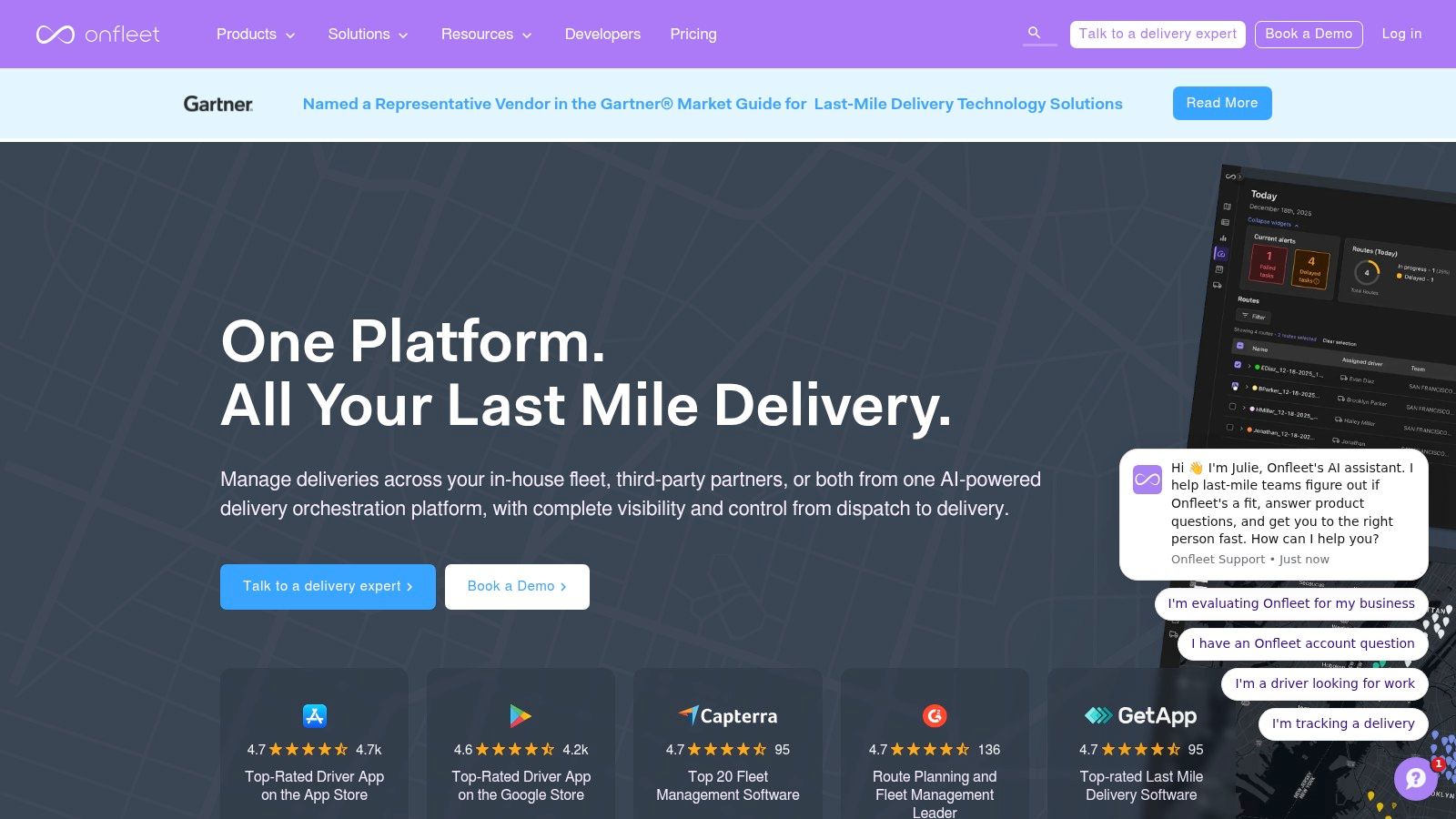
Onfleet is for a delivery operation that has outgrown stop sequencing and needs dispatch, driver workflow and customer notification in one system. Plans bundle route optimization and driver assignment with a live map, ETAs, recipient notifications, branded tracking and proof of delivery.
Published pricing starts at $619 per month for Launch, covering up to 2,500 completed deliveries (Onfleet, price check date pending verification). The cost per delivery falls the closer an operation runs to that ceiling, which makes density the deciding variable. Dense urban routes justify the number. Routes with long gaps between drops don't.
Delivery work is where the category's money sits. DataIntelo's fleet route planning software market estimate valued the global market at $6.8 billion in 2025, projected to reach $17.4 billion by 2034 at a 10.9% compound annual growth rate from 2026 through 2034, with transportation and logistics the largest application segment at 42.1% of the 2025 market, about $2.9 billion.
What sits on higher tiers
Barcode scanning and advanced optimization are not in the entry plan, and higher delivery volumes move to more expensive plans or a custom quote. A 14-day free trial is listed. Teams scoping the wider delivery stack usually start with a delivery management software comparison before shortlisting a routing layer.
- Dispatch: driver assignment with a live map.
- Customer side: ETAs, notifications and a branded tracking page.
- Proof of delivery: captured in the driver app, with barcode scanning above Launch.
5. Spoke Dispatch
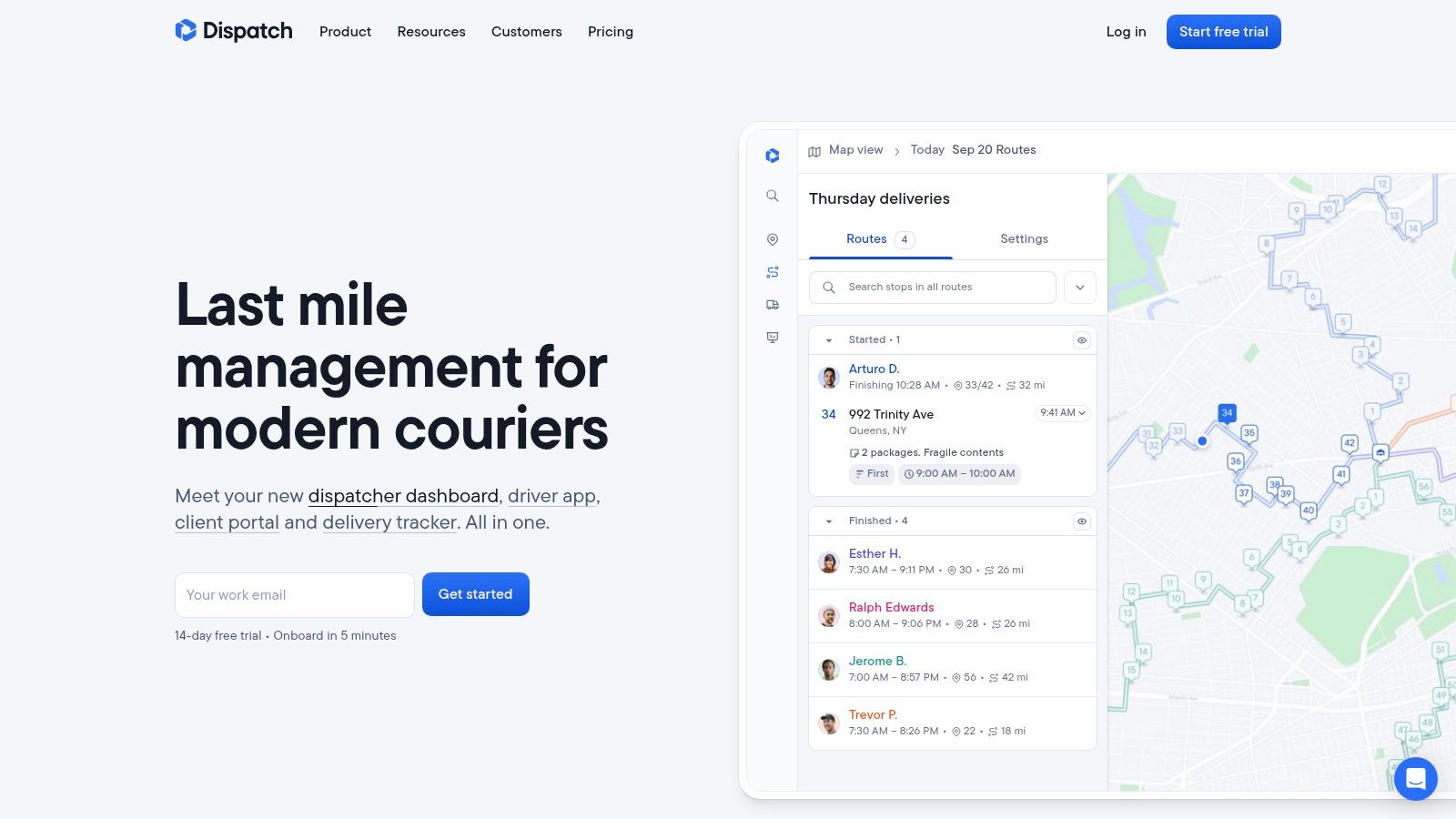
Spoke Dispatch, previously sold as Circuit for Teams, is built for a courier or delivery team that needs a dispatcher view first and a driver app second. It plans and assigns routes across multiple drivers, tracks route progress, supports delivery time windows and route adjustments, and runs a separate driver app for execution. The solo Spoke Route Planner is a different product for individual drivers.
Stop-volume pricing is described in third-party references at $125 per month for 1,000 stops (Spoke, price pending verification). The bill follows workload rather than headcount, and current product information lists unlimited drivers, so a large driver pool on a modest stop count is the shape this pricing suits. Overage terms and current inclusions need confirming on Spoke's own pricing page. A 14-day trial is listed.
Re-planning is not automatically an upgrade
New orders, breakdowns and failed deliveries can trigger repeated plan changes during the day. Locus.sh's coverage of dynamic re-routing describes the shift from overnight batch planning toward continuously updated execution, with sub-30-minute delivery pushing platforms toward higher-frequency optimization. Every re-plan moves a driver off a route they knew and resets a customer promise.
Set the rule before go-live: locked routes, exception-only changes, or continuous optimization. Then ask for maximum re-plan frequency, dispatcher approval controls, audit logs and the driver notification method. Teams moving freight rather than parcels should compare a trucking dispatch platform instead, because stop-volume pricing assumes short drops.
6. Badger Maps
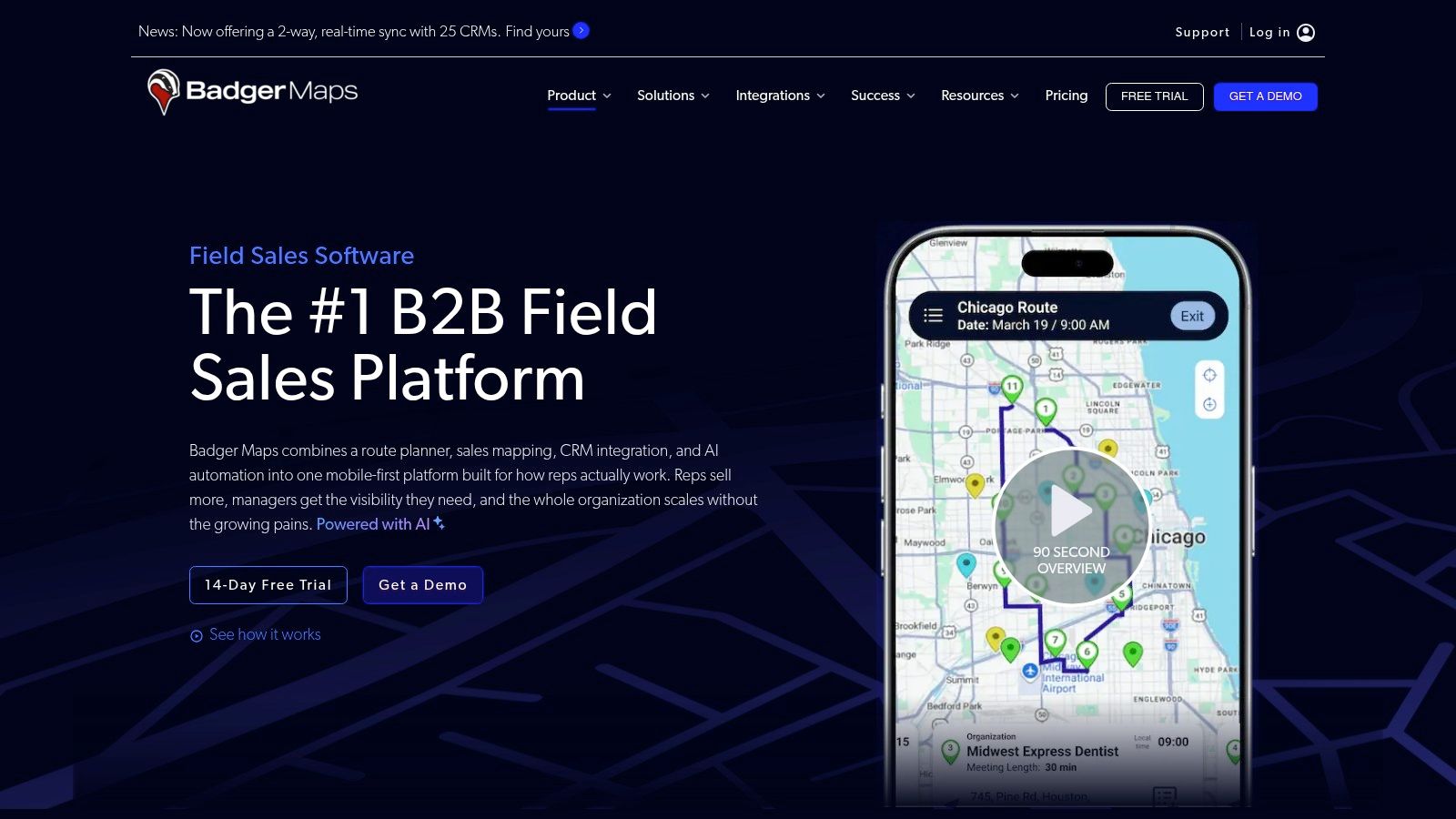
Badger Maps is for the sales rep who visits customers, not the courier who delivers parcels. It maps customer and prospect records, optimizes a multi-stop day of visits, syncs with a CRM and captures field activity, with iOS and Android apps.
The Business plan is listed at $58 per user per month billed annually or $69 month to month, with a 90-day money-back guarantee (Badger Maps, price check date pending verification). Annual billing is the lower of the two rates, so a team that commits saves on every seat. There's no per-stop or per-order charge, so cost scales with the sales team and nothing else.
The route limit that rarely binds
Route optimization is listed with a limit of 120 stops, well beyond a realistic day of customer visits. Business also carries two-way real-time CRM integration, lead generation, forms and activity reporting, which is the part that earns the per-user fee.
- Mapping: accounts and prospects plotted by address.
- Planning: a visiting order that respects geography and drive time.
- Reporting: what the rep logged in the field.
Fit test: if the job ends with a signature from a customer who ordered online, this is the wrong tool. Badger Maps isn't a delivery dispatch or proof-of-delivery platform.
On annual billing a small sales team lands below most delivery platforms' entry plans and buys a completely different job.
7. MyRouteOnline
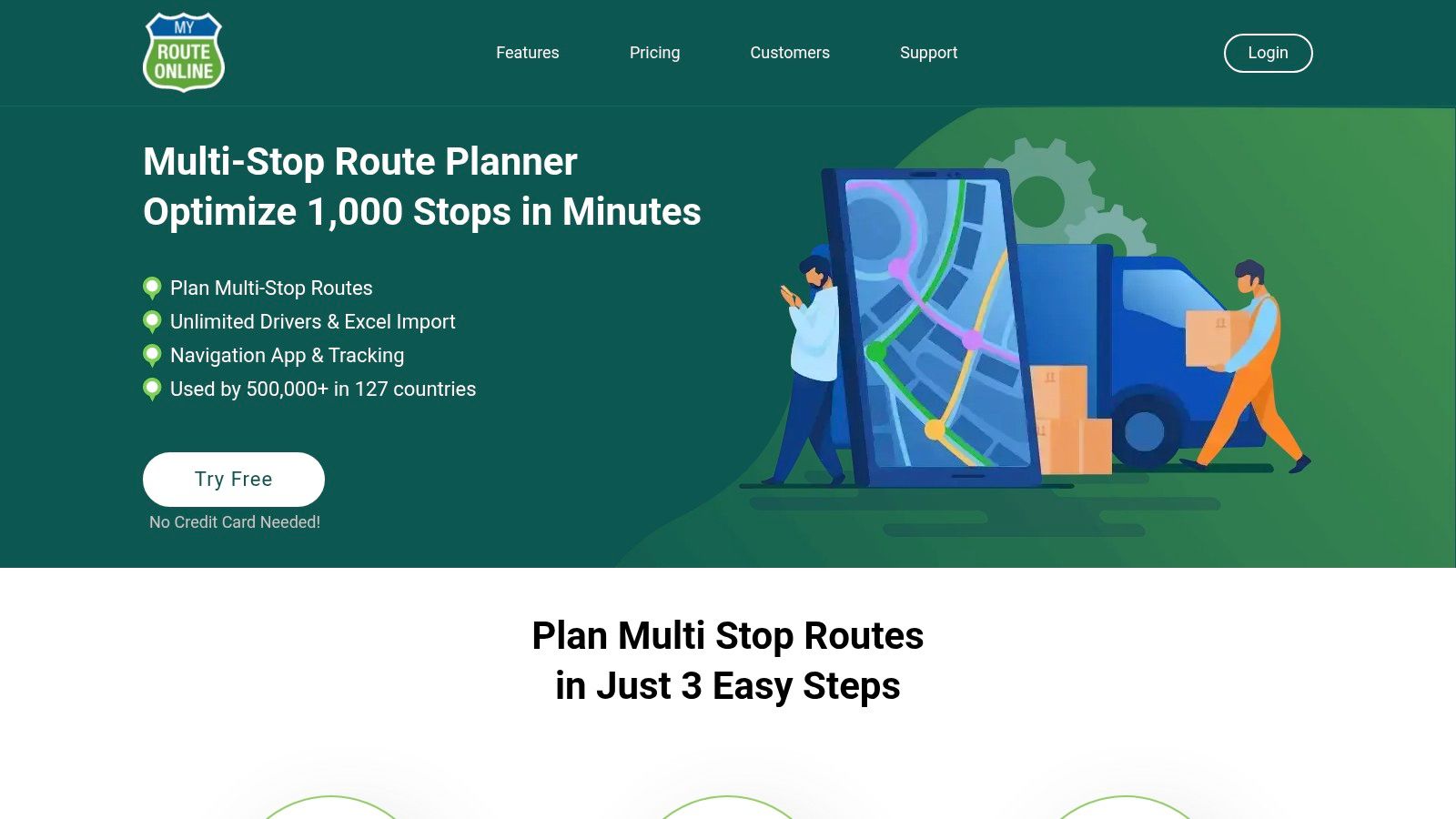
A business that plans routes twice a week, then hands one driver a stop list, does not need an all-day dispatch desk. MyRouteOnline is built for that occasional job: enter or upload addresses, optimize the sequence, and share the route.
The bill is address credits, not users or drivers. Basic is listed at $19 per month for 50 address credits, with a $24 pay-as-you-go option and a free trial that does not require a credit card (MyRouteOnline). Previously planned addresses can be reused without spending a new credit, so a standing customer does not burn another credit on the next run. New addresses are what empty the pool.
Fifty credits is a small monthly allowance. Use all of them and $19 works out to $0.38 per new address. Leave some unused and the unused portion is still inside the flat fee. Pay-as-you-go at $24 is the other published choice when volume jumps around and a subscription would overshoot. I would not put a distributor with several hundred fresh delivery addresses a month on this model. The route output can be fine and the credit count still scales the wrong way.
Planning covers multi-stop, multi-route and multi-day optimization, with spreadsheet import and route export. A driver app, live tracking and proof of delivery are listed among the included features. Those execution pieces are where a cheap credit plan is easiest to outgrow, so check them on the driver side during the trial before you rely on it for anything larger than occasional routes.
8. RoadWarrior
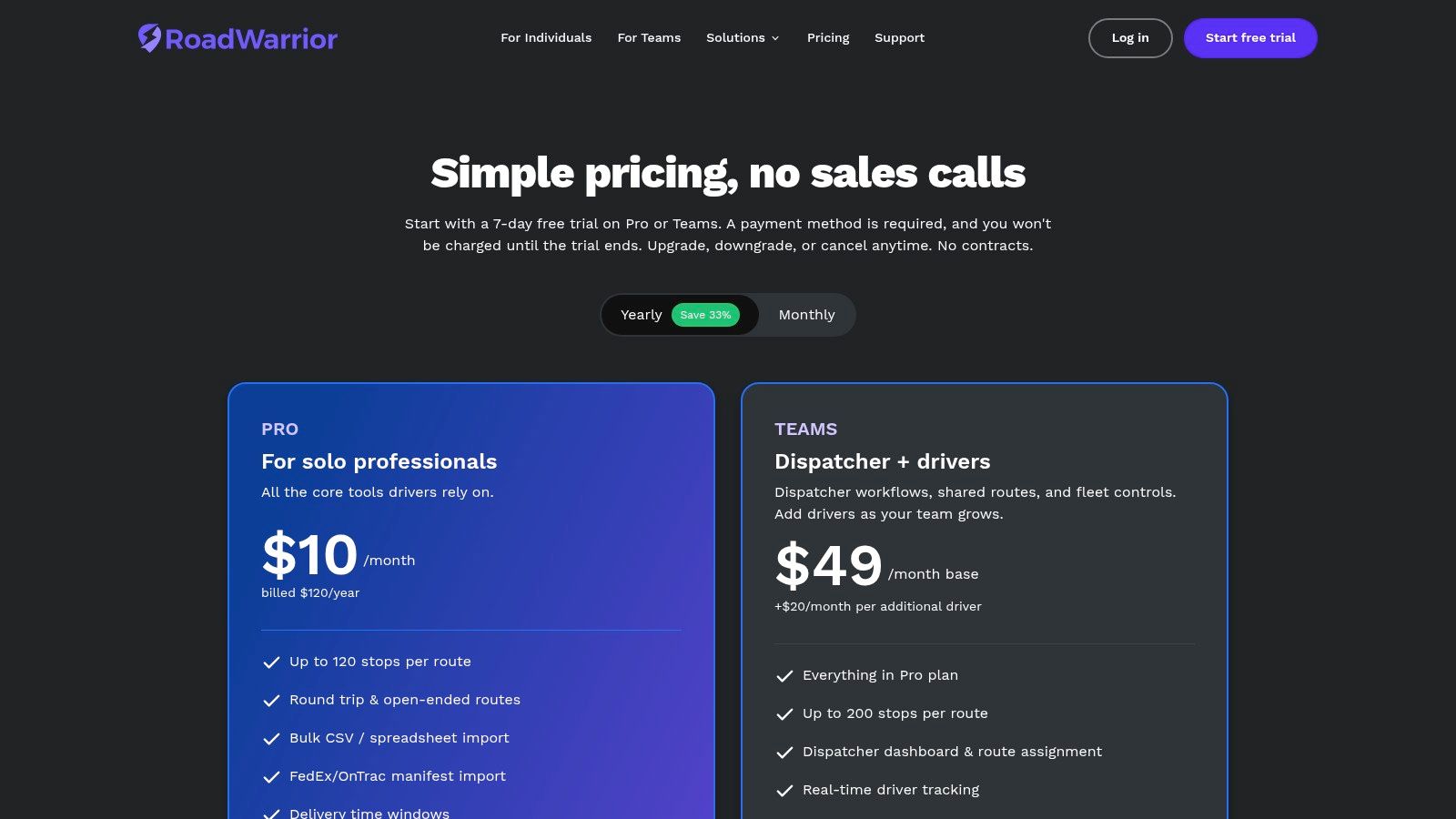
RoadWarrior sells two products, and the split matters. Pro is for a driver planning their own day, while Teams is for a dispatcher assigning routes and watching drivers live.
A free plan covers routes of up to eight stops. Pro is $10 per month billed annually or $15 month to month, and Teams starts at $49 per month, rising as driver seats are added (RoadWarrior, price check date pending verification). Pro handles routes up to 120 stops with bulk spreadsheet imports; Teams handles up to 200 stops. A payment method is required to start the listed free trials, so diarise the cancellation date before you start.
Where the money goes
For a solo operator, Pro is the cheapest credible option in this list at $10 a month. For a four-driver team, the $49 base plus seats is the number that matters, and it climbs with every hire. Routes hand off to Apple Maps, Google Maps or Waze for turn-by-turn, which avoids rebuilding navigation inside the app.
Some features on the RoadWarrior pricing page are marked as coming soon. Ask for the ones you need to be written into the order form rather than promised on a call.
The free tier is usable for a rep with a short list, and it is the right way to test whether the Teams interface suits a dispatcher before paying anything.
9. Mapline
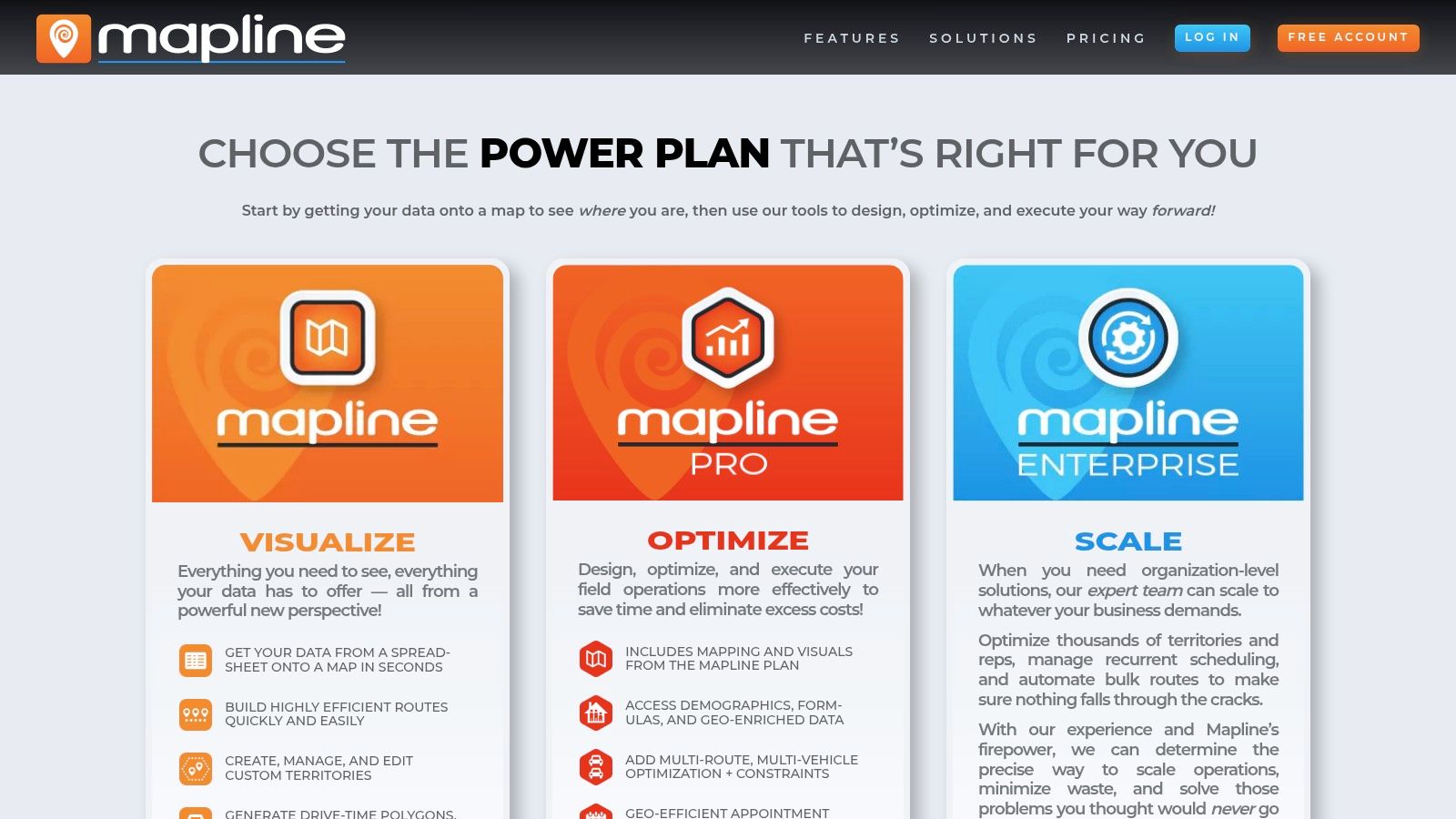
Mapline answers the question that comes before routing: where are our customers, and how should territories be drawn? It imports spreadsheet data, builds maps and dashboards, visualizes routes and optimizes for a single vehicle, with multi-route, multi-vehicle optimization and constraints on higher plans.
A free Starter plan is listed and, according to the pricing page, doesn't expire. Advanced optimization and enterprise pricing require contacting Mapline for a quote (Mapline, pricing pending verification). That makes the paid tiers the hardest on this list to budget from a browser, so request a written quote against your address count, user count and territory count rather than signing off on a demo headline.
Where mapping ends and dispatch begins
- Visualization: routes plotted on a map with dashboards over the same data.
- Territories: boundaries, assignment and rebalancing across reps or service areas.
- Automation: scheduling and workflow rules on the upper plans.
Territory design and daily dispatch are different purchases. A field-service business that redraws 40 postcode zones twice a year gets more from Mapline than from a per-driver routing plan. A courier running several hundred drops a day gets almost nothing from it. Buyers should also verify plan terms and annual billing requirements directly, because the free tier is a mapping product and the routing capabilities that matter sit behind a quote.
10. Descartes Route Planner
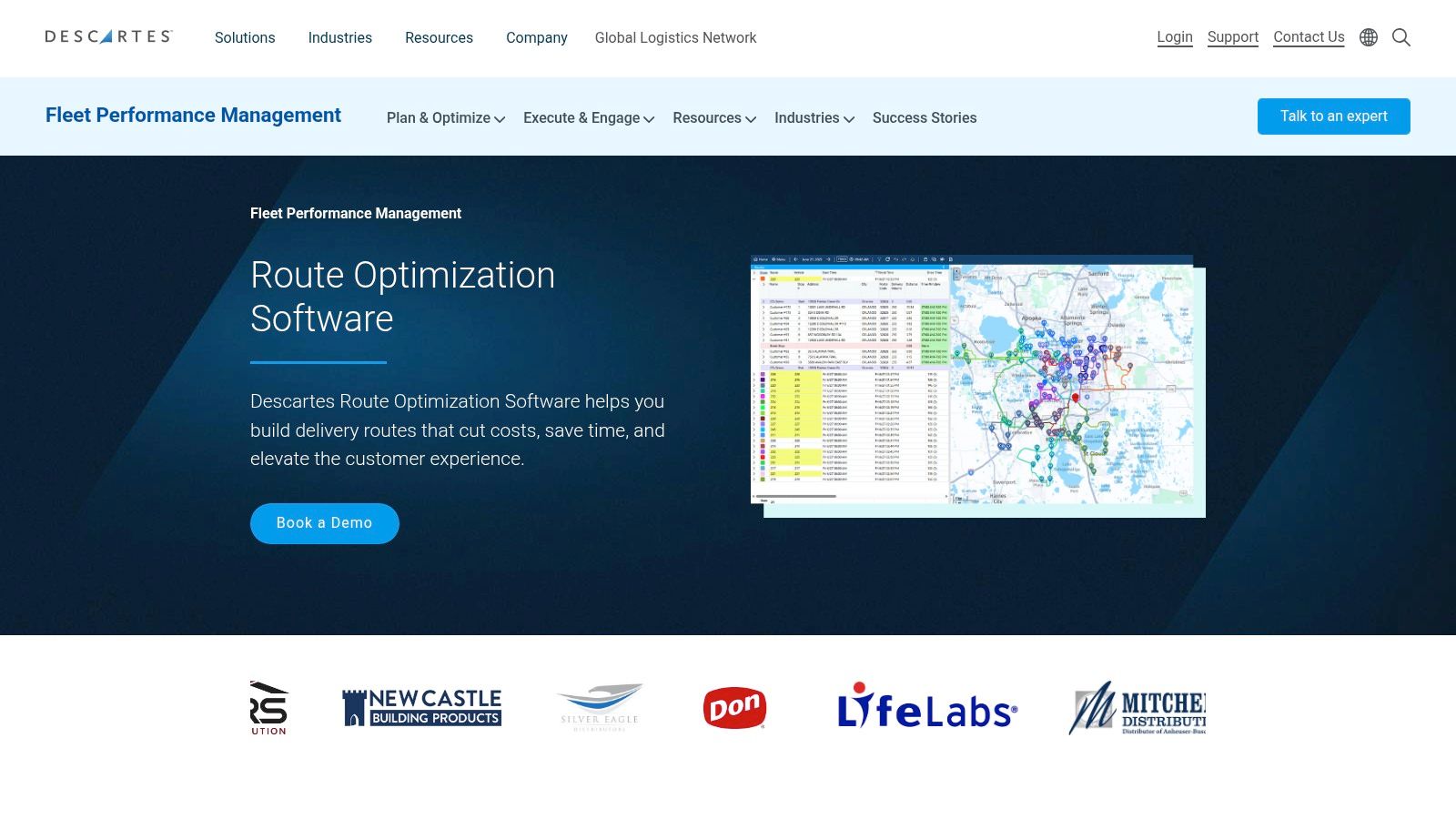
Descartes Route Planner is for established distributors and fleet operators whose delivery network is complex enough to need a specialist. It plans around vehicle capacity, driver hours, skills and delivery time windows, with continuous optimization that accounts for new orders and changes during the day. Planning connects to dispatch, execution and performance analysis, and strategic planning options cover longer-term route and territory design.
Pricing is sales-led rather than a self-serve plan (Descartes, pricing pending verification), so cost is the quote plus implementation, integrations and support. That isn't a reason to avoid it. It is a reason to scope the project before setting a monthly subscription against it.
Mixed fleets and emissions claims
Locus.sh's route planning coverage identifies mixed-fleet orchestration as an emerging expectation, spanning owned vehicles, outsourced carriers, gig drivers, combustion and electric vehicles, alongside battery-range management, charging-station navigation and carbon monitoring. The procurement trap is comparing emissions figures that aren't measuring the same input: fuel use, distance, vehicle class and telematics data produce different totals.
Define minimum viable capabilities first, then require the vendor to document how emissions are calculated and whether the platform does genuine multi-fleet optimization or simple vehicle tagging. Fleets with heavy rule sets usually compare this against truck routing software built for the same constraints.
A small fleet without a control tower should test whether it can absorb continuous re-planning at all. Complexity carries an operating cost, not just a licence cost.
Route planning software compared by optimization, dispatch, tracking and published starting price
| Item | Route optimization scope | Dispatch support | Live tracking | Published starting price |
|---|---|---|---|---|
| OptimoRoute | Up to 700 orders on Lite; 1,000 on Pro | Driver app and route tools; dispatch features not specified | Yes, with live ETAs | $35.10 per driver/month, billed annually |
| Routific | Multi-stop routing with time windows, vehicle capacities, and driver shifts | Driver app and delivery execution tools | Yes, with customer-facing ETAs | Free for up to 100 orders/month; paid plan $150/month |
| Route4Me | Routing across multiple drivers, vehicles, and facilities | Yes, with configurable workflows | Route monitoring; availability depends on configuration | Custom pricing |
| Onfleet | Route optimization and driver assignment | Yes, with delivery execution workflows | Yes, with live map and ETAs | $619/month |
| Spoke Dispatch | Route planning across multiple drivers, with time windows and adjustments | Yes, team dispatch and route assignment | Yes, route-progress tracking | Reported from $125/month; confirm current pricing |
| Badger Maps | Multi-stop routing for sales and field teams; up to 120 stops | Not primarily a delivery dispatch tool | Not specified | $58 per user/month, billed annually |
| MyRouteOnline | Multi-stop, multi-route, and multi-day optimization | Route sharing and driver app | Yes, listed among included features | $19/month for 50 address credits |
| RoadWarrior | Up to 120 stops on Pro; up to 200 on Teams | Teams includes dispatcher route assignment | Yes, on Teams | Free for up to 8 stops; Pro from $10/month billed annually |
| Mapline | Single-vehicle optimization; higher plans add multi-route and multi-vehicle routing | Dispatch support not specified | Not specified | Free Starter plan; advanced optimization requires a quote |
| Descartes Route Planner | Complex routing with capacity, driver-hour, skill, and time-window constraints | Yes, connects planning with dispatch and execution | Not specified | Sales quote required |
Shortlist Two Route Planners and Price Them on Your Own Volume
A Tuesday with two drivers out sick and a late order at 10am tells you more than a clean demo week. Shortlist one planner that matches the job and one that matches the budget, then price both on a representative week of your own volume.
Match the pricing model to your volume
The four models in this list move in different directions as an operation grows. Per driver (OptimoRoute at $35.10 per driver on Lite, Badger Maps at $58 per user) stays predictable with a stable headcount and gets expensive when seasonal drivers come on. Per completed delivery (Onfleet's $619 Launch plan for up to 2,500 deliveries) favors dense routes and costs more when work is spread thin. Per order or per stop (Routific's $150 for 1,000 orders, Spoke Dispatch reported from $125 for 1,000 stops) follows workload, which suits contract work and hurts high-volume delivery. Treat the Spoke figure as pending verification until you have the vendor page and the date you checked it. Per address credit (MyRouteOnline's $19 for 50) fits repeat addresses and occasional planning.
Pull last month's counts and keep the units apart: drivers scheduled, deliveries completed, stops or orders planned, unique addresses touched. Then divide each count by the matching plan. Routific's published band is orders, 1,000 on the $150 plan. Onfleet's band is completed deliveries, up to 2,500 on the $619 Launch plan. Compare your completed-delivery count with Onfleet's ceiling. An order count above 1,000 does not put the business inside that plan, and mixing the two units can change the shortlist before any feature comparison starts.
- Count the peak week, not the average: seasonal volume is what breaks a budget.
- Ask what counts as a delivery or a stop: completed, attempted and cancelled can sit in different buckets.
- Get the overage rate in writing: the published ceiling is where the price begins.
Get the quote-only prices in writing
Route4Me, Mapline's advanced optimization and Descartes Route Planner do not publish a self-serve price, so three quotes on identical inputs are the fair comparison. Mapline does list a free Starter plan, which is not a quote for multi-route work. Send each vendor the same stop count, driver count, depot count and integration list, and ask for implementation, support and add-on line items separately. A single blended figure hides the module that made it expensive.
Run the test on your own addresses
Most tools here offer a free trial, a free plan or a money-back guarantee, and that test period is where a routing plan is proved or lost. Badger Maps lists a 90-day money-back guarantee rather than a trial. Routific's published offer is a free plan. Route4Me and Descartes Route Planner are quote-based, so there is no self-serve trial price to load. Where you can get in, load a real week of addresses, including the awkward ones: the farm track, the mall with no loading bay, the customer who needs a two-hour window. Then see how the plan behaves when a driver calls in sick and an order lands at 10am.
- Test the driver app, not just the plan: navigation handoff and proof of delivery fail.
- Test the exception path: reassignment, failed delivery, late pickup.
- Test the report you'll be judged on: on-time rate, stops per shift, miles per route.
Write the date you checked each price next to the plan name. Where that date is not on file, mark the price pending verification instead of dating it. TopToolAdvisor scores every product in a shortlist the same way, quotes each vendor's price as the vendor publishes it, and lists the date checked.
Then decide. Two shortlisted tools, one live week, one written quote, and a date or a pending mark on every number in the file. Open both pricing pages, copy today's date beside each plan name, and book the first available test for the week your routes are hardest.
Cite this page
TopToolAdvisor. "10 Best Software Route Planning Tools for 2026." Updated November 28, 2026. https://toptooladvisor.com/software-route-planning
Questions or corrections: editorial@toptooladvisor.com