Guide · General
Best SMS Marketing Platform in 2026: 7 Picks Compared
Our research desk compares the best SMS marketing platform options of 2026 by campaign features, usability, and published pricing. Quotes dated and sourced.
By the TopToolAdvisor research desk · Updated November 19, 2026 · 10 min read
Texting beats social messaging for brand conversations, yet many businesses still cannot answer the reply. In a 2016 survey of more than 6,000 consumers across seven countries, 47% said they preferred native SMS when communicating with brands, against 21% for Facebook Messenger and 18% for WhatsApp, and Twilio's messaging study also cites global research putting native messaging app use at 90% of consumers, with fewer than half of businesses equipped to meet that demand.
The TopToolAdvisor research desk compared documented features and published prices across the SMS marketing platforms below and scored each the same way on features, ease of use and value. Prices are quoted as vendors publish them. The directory carries no affiliate links and no paid placement. Each pick is tied to a buyer situation rather than one overall winner, from Shopify stores to a clinic that just needs to text a list.
Table of Contents
- 1. Klaviyo
- 2. Attentive
- 3. Postscript
- 4. Omnisend
- 5. SimpleTexting
- 6. EZ Texting
- 7. SlickText
- 7 SMS marketing platforms compared on published pricing and fit
- How to Choose and What It Will Really Cost
1. Klaviyo
For ecommerce teams, SMS and email work best when they run off the same customer profile, and Klaviyo is built around exactly that. A browse event, a past order or a predicted lifetime value decides who receives a text, and flows pull both channels into one sequence instead of two disconnected tools.
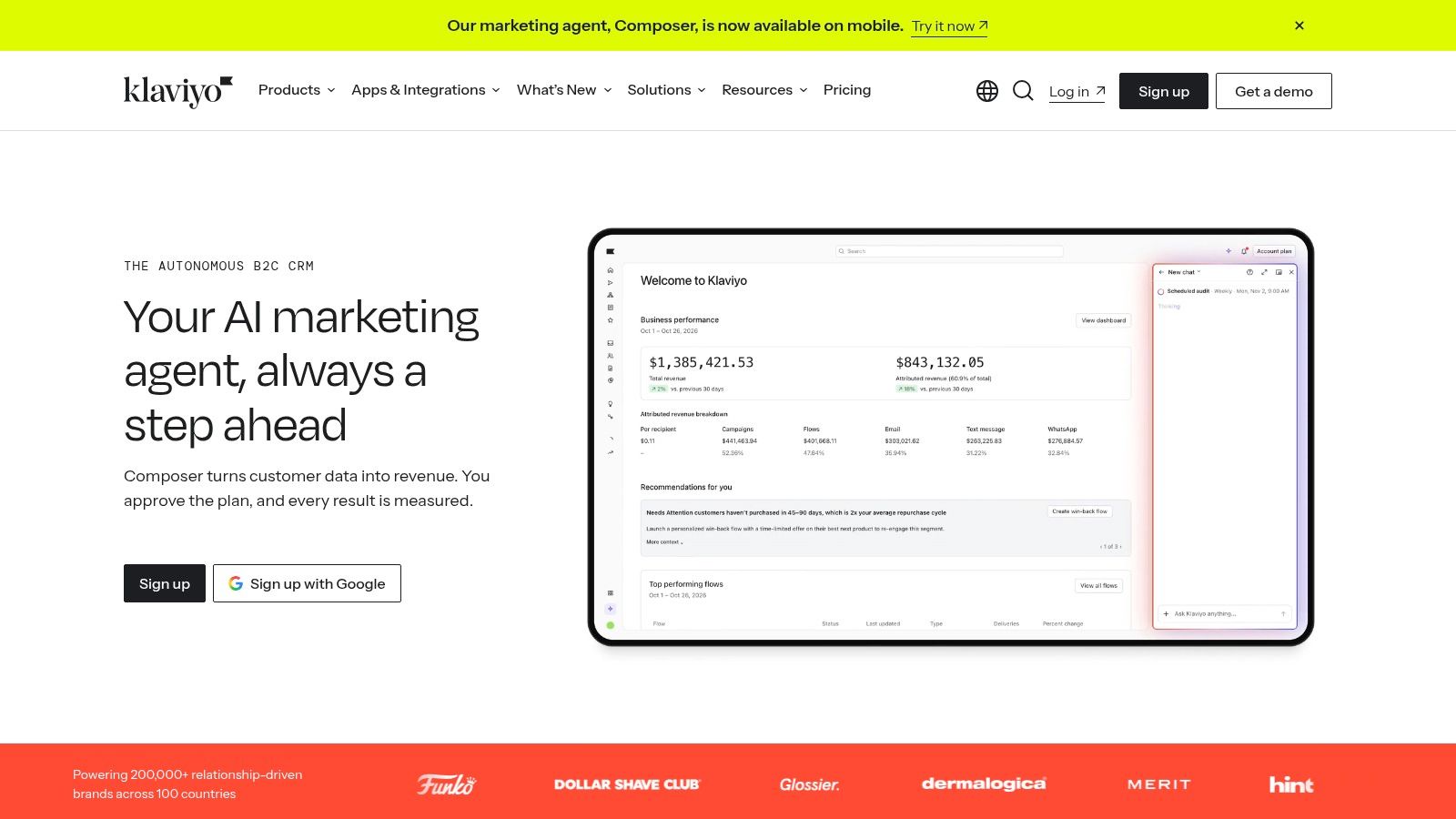
Klaviyo lists a free plan with up to 250 active profiles, 500 email sends per month and $5 of mobile-message usage, while the displayed paid Email plan starts at $20 per month and treats SMS and MMS as an add-on. Mobile messaging moved from credits to dollar-based per-message rates on July 13, 2026, and the rate applies to each message segment, so a two-segment text costs twice the per-segment rate.
Read the unit model before comparing quotes
Klaviyo bills mobile messages in units, and the unit count differs by message type and destination country. SMS and MMS do not consume the same number of units, and a text sent to an international number does not price like a domestic one.
That matters for any store with customers across borders. Confirm the unit count for each message type and region you send to before comparing Klaviyo's per-message rates against a flat quote elsewhere.
Features
- Campaigns and automation: SMS and email share one composer, one flow builder and cross-channel reporting.
- Behavior-based segmentation: profiles and activity, including clicks and order history, drive targeting.
- Marketing integrations and sending numbers: several number options, with registration requirements that vary by location and number type.
Pros: SMS, email and customer data live in one account, and carrier costs appear in the account billing area. Cons: pricing depends on audience size, message volume and recipient region, and unused mobile-message plan spend doesn't roll over.
Teams mapping their triggers before they commit should start with what marketing automation covers.
2. Attentive
Attentive fits an established consumer brand that already treats mobile as a revenue channel and wants SMS, MMS, RCS, email and push coordinated in one place. It is more platform than a small list needs, and the sales process reflects that.
The value is consolidation and coordination. A team running subscriber acquisition, journeys and reporting across several channels can centralize the work here; a business that only needs a weekly promo text will pay for scope it will not use.
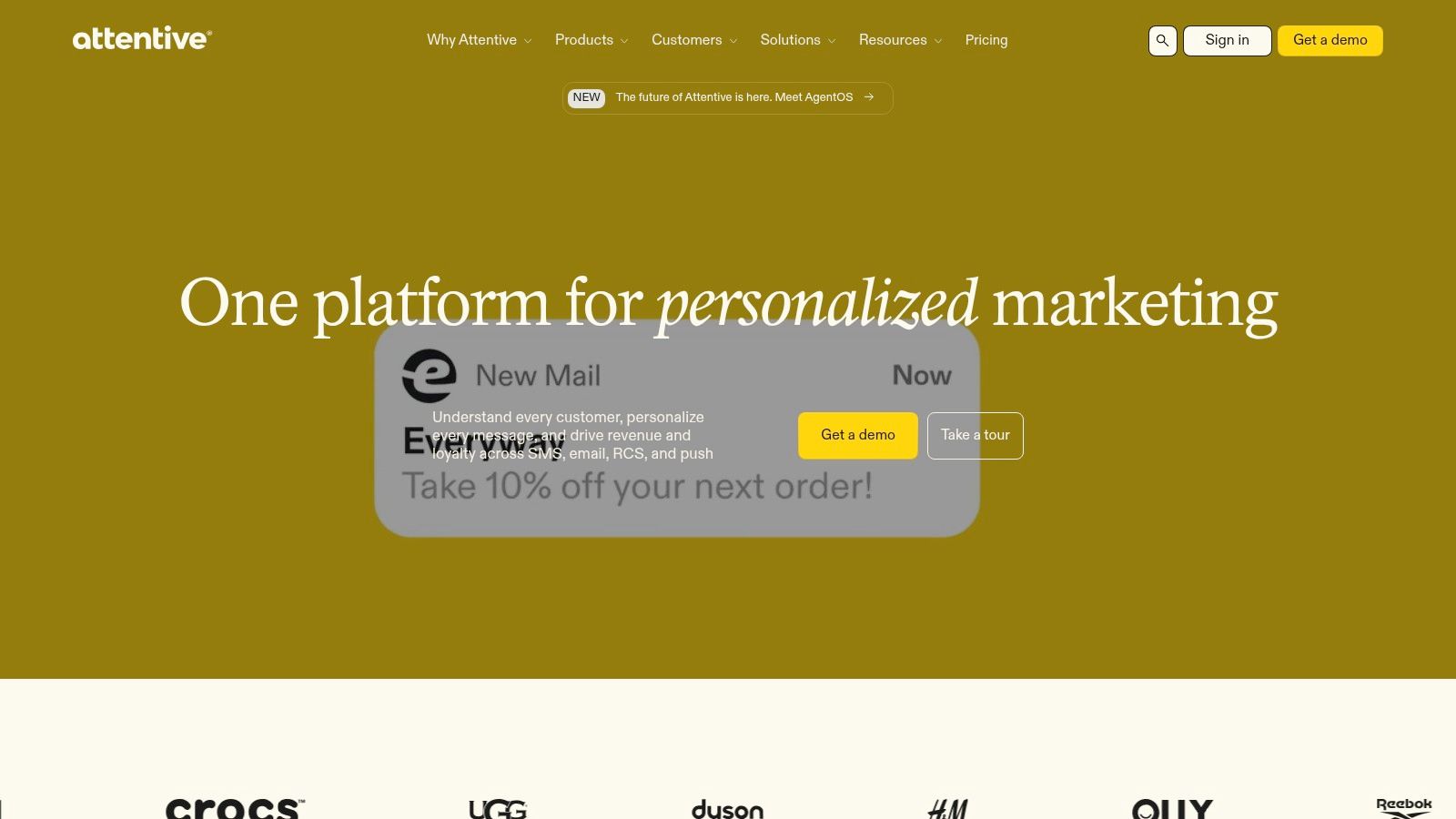
Attentive quotes custom, usage-based pricing rather than a published subscription. Cost depends on message volume, list size, the channels switched on and the products selected, so ask which usage and carrier charges sit outside the platform fee before comparing it with self-serve tools.
Features
- Five channels: SMS, MMS, RCS, email and push from one account.
- Signup and journey tools: subscriber acquisition assets plus prebuilt cross-channel journeys.
- Testing and reporting: campaign testing, segmentation and analytics.
- Service layer: integrations, onboarding and support scoped through the sales process rather than listed as fixed published plans.
Pros: consolidates several messaging channels and pairs them with onboarding and strategic support options for teams that want a managed rollout. Cons: no standard price list, and the model is heavy for a business that wants a self-serve tool it can start this week.
Practical rule: ask for the contract term, the quarterly minimum and the cancellation window in writing before you evaluate features. A platform with excellent list growth is still the wrong buy if the minimum outlives the campaign.
3. Postscript
Postscript's entry tier carries a $0 platform fee and a $49 monthly minimum spend, which tells you exactly where the product points. It is built for Shopify-oriented stores that send enough volume for message and carrier fees, not subscription fees, to be the main cost line.
Judge it on click behavior, not open rates. SMS delivers no standard read receipt, so a vendor reporting opens is reporting something it can't observe. ClickMinded's SMS marketing benchmarks put the median campaign click rate at 5.5%, the overall rate at 6.0% and the top-decile threshold at 23.9%.
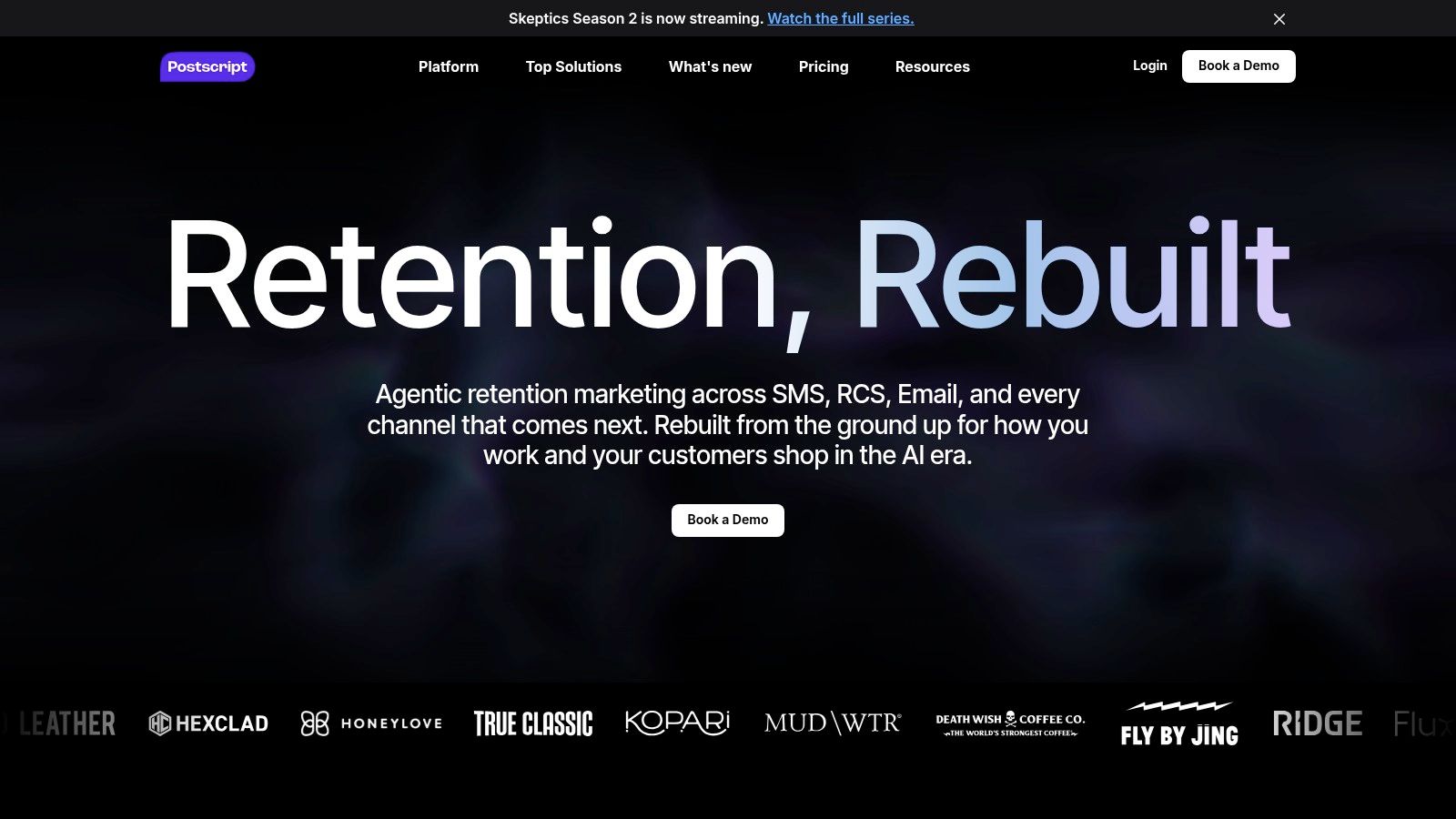
Pricing on Postscript's site runs Starter at $0 per month with that $49 minimum, Growth at $100 per month and Professional at $500 per month, with SMS and MMS usage billed on top.
Features
- Campaigns and flows: promotional sends plus automated ecommerce sequences.
- List growth: opt-in keywords and subscriber acquisition tools.
- Segmentation: audience groups built for merchandising rather than general bulk texting.
- Higher tiers only: analytics depth, support levels and API access.
Pros: focused on ecommerce SMS instead of repurposed bulk texting, and Starter carries no platform fee. Cons: the minimum spend contradicts the headline price, usage fees sit outside it, and the analytics and API that make reporting auditable are locked behind the upper tiers.
4. Omnisend
Opt-in is no longer the bottleneck, which is why Omnisend's email plus SMS combination works for stores that already run a list. A 2025 survey of 1,000 U.S. consumers and 400 business owners or digital marketers found 84% of consumers had opted in to receive business SMS, a 35% increase from several years earlier, per SimpleTexting's 2025 texting and SMS marketing statistics. In a separate 2025 consumer report of 1,074 respondents, nearly half had purchased after receiving a business text.
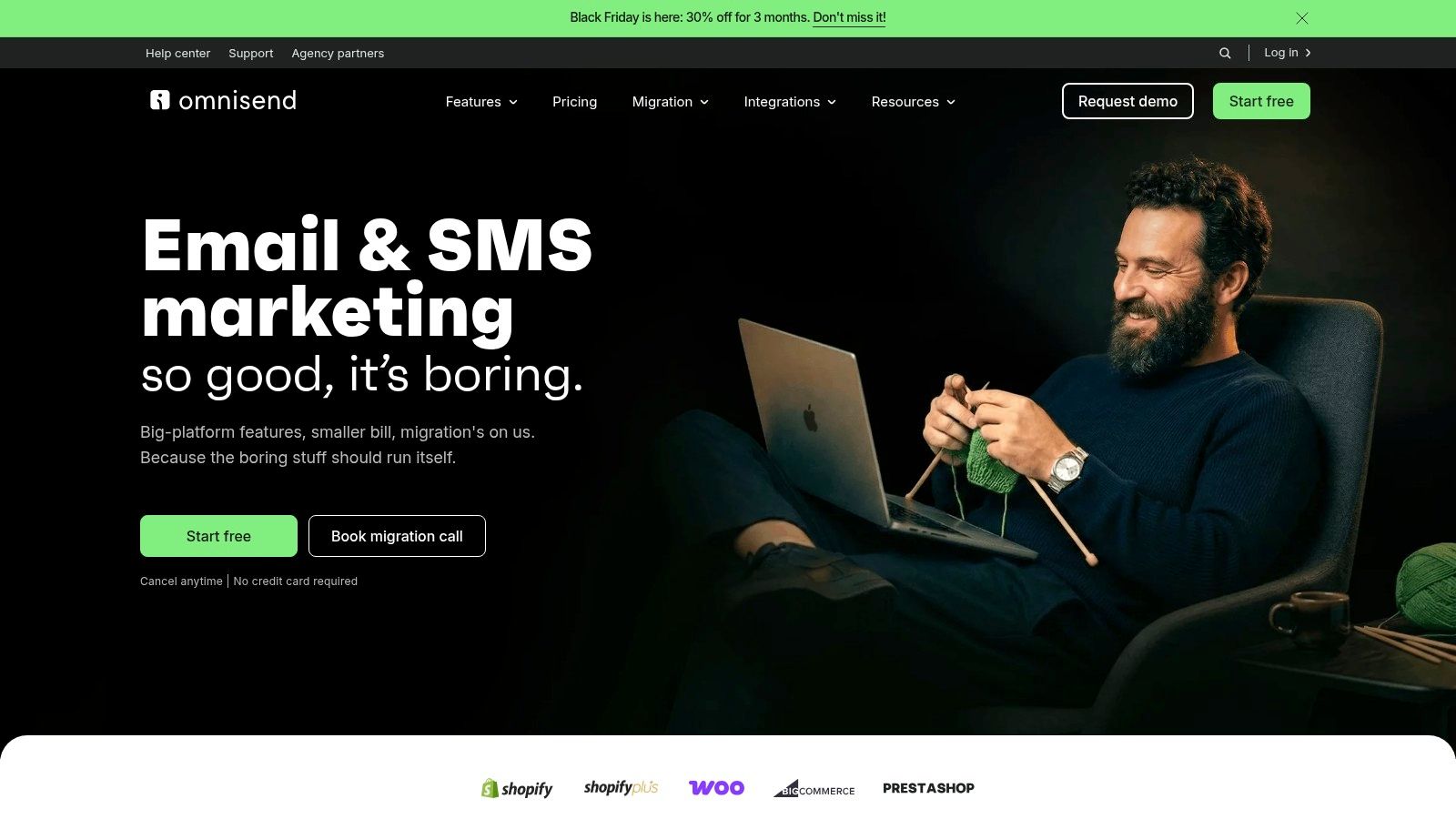
Omnisend ties SMS credits to its Pro plan, and the published U.S. rates start at $0.009 per message at the lower listed monthly spend and fall to $0.007 at the highest tier. Rates vary by destination and volume, so the headline number is a starting point, not a quote.
Features
- SMS inside ecommerce workflows: campaigns and automation next to email.
- Signup forms and personalization: scheduled sends, bulk messaging and dynamic fields.
- Reporting: segmentation, A/B testing, click tracking and revenue attribution.
- Coordination: email and SMS scheduled from one calendar.
Pros: SMS and email without a second campaign tool, published volume-based U.S. rates, and reporting built for online stores. Cons: SMS credits follow the Pro plan, international rates move with country and volume, and segment counting still decides the final bill.
For context on what email results look like alongside text, the directory's email marketing statistics collect the sourced figures.
5. SimpleTexting
SimpleTexting fits the business that needs campaigns and a working inbox in the same product, without ecommerce plumbing. Response handling is the test here, and the numbers are unforgiving. 57% of consumers expect a business reply within 15 minutes, 30% say they have texted a business and received no response, and nearly 70% have blocked a business number over spammy behavior, according to Textmagic's 2025 State of Business Texting report.
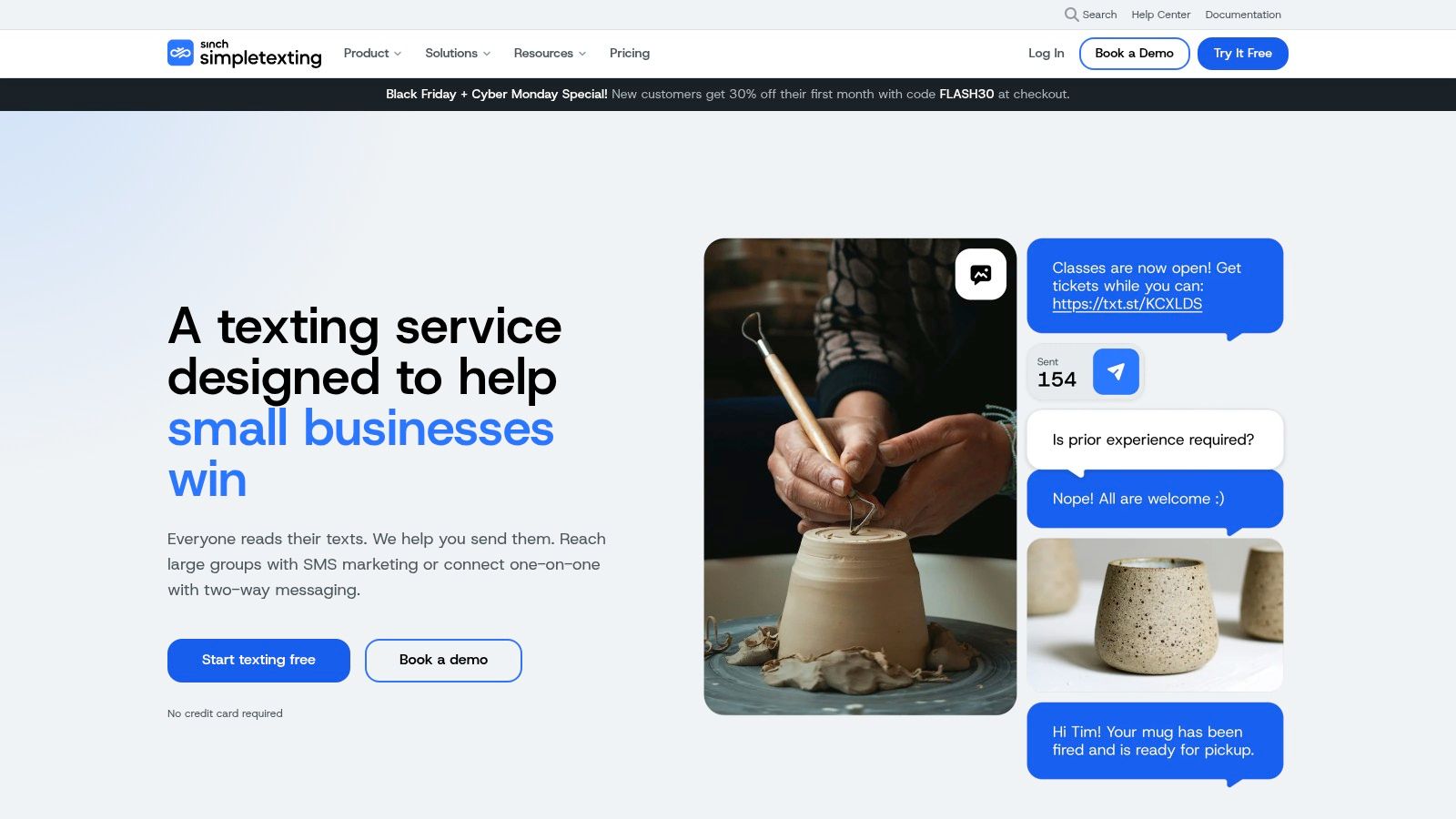
SimpleTexting's pricing page gives an example of 500 credits for $29 per month, with a local number adding $10 per month and a one-time $4 carrier registration fee. Total cost moves with number type and message volume.
Features
- Campaigns and conversations: mass texting, two-way messaging and auto-replies in one place.
- Growth tools: keywords, opt-in forms, drip campaigns and audience segments.
- Technical access: MMS, API access, Mailchimp and Zapier integrations, reporting and rollover credits.
- Number choice: local, toll-free and short-code options.
Pros: handles inbound replies as seriously as outbound sends and publishes its pricing components, including carrier fees. Nonprofits, churches and tax-exempt organizations get listed discounts. Cons: the local number adds a recurring fee plus registration, MMS burns more credits than SMS, and extra seats or numbers raise the bill.
A reply that lands 40 minutes late is a missed sale, not a slow answer. Buy the inbox your team will actually staff.
Teams that want texting inside a sales pipeline should compare the best CRM with texting before signing a standalone contract.
6. EZ Texting
EZ Texting is the simple pick for a small business that wants to text a list and read replies privately in one inbox, with no ecommerce machinery attached. Volume keeps rising across the market. Businesses sent an average of 36% more text messages in 2023 than in 2022, per Bandwidth's 2024 State of Messaging Report.
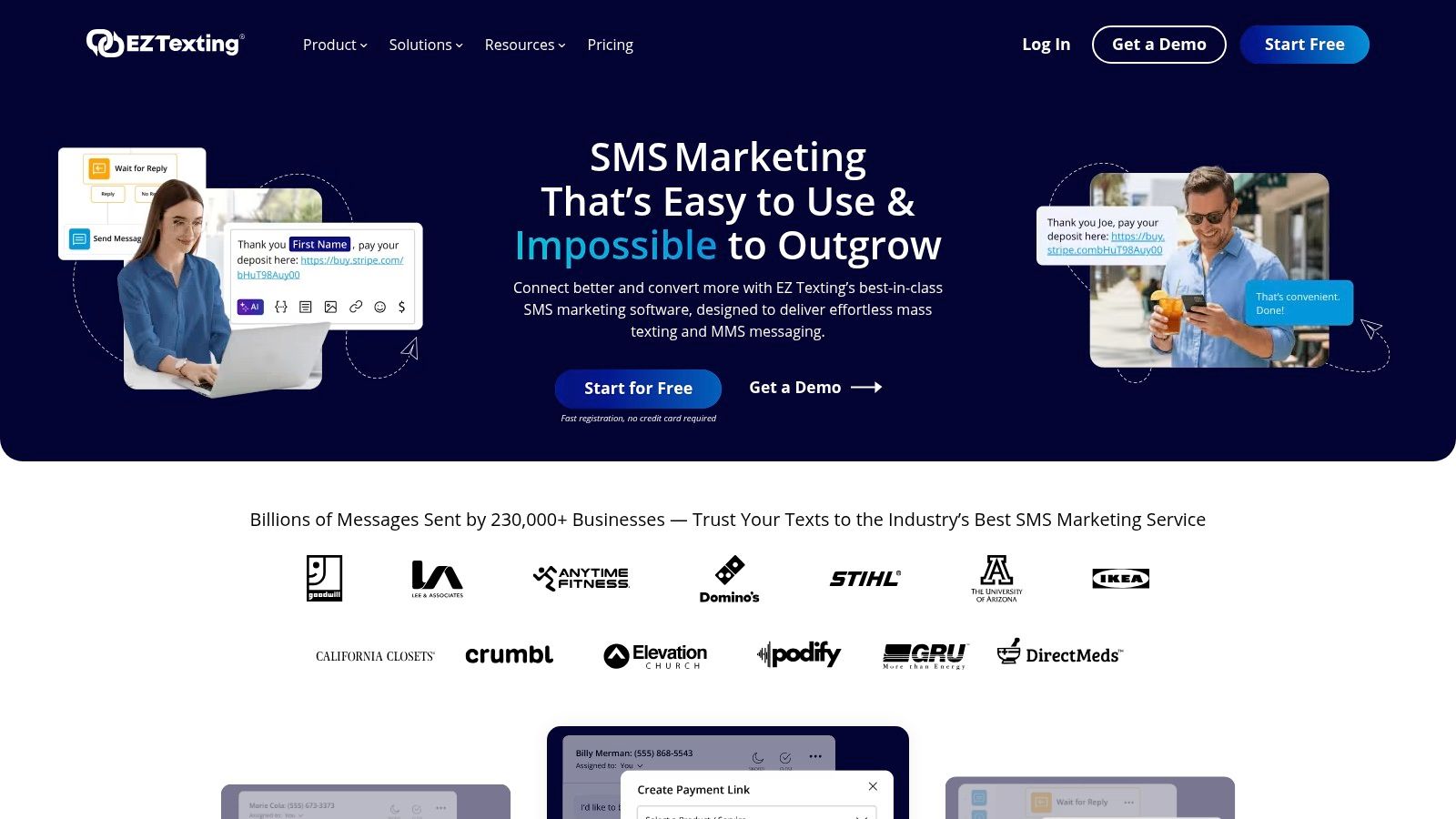
EZ Texting lists monthly plans at $25 for Launch, $75 for Boost and $125 for Scale, each with included credits and per-credit overage rates, plus a trial option. Incoming messages are listed as free.
Features
- Group SMS and MMS: campaigns to contact lists, built for announcements and promotions.
- Private replies: two-way messaging that keeps responses out of a public thread.
- Number options: local and high-volume numbers.
- Credits: monthly allowances with rollover terms on eligible standard plans.
Pros: straightforward for announcements and group messaging, with published credits and overage rates on the pricing page. Cons: each listed tier includes one user, MMS consumes more credits than SMS, and telecom fees and other charges can lift the total beyond the plan price.
The tool is deliberately narrower than Klaviyo or Omnisend. If your sending is a weekly reminder to a few thousand contacts, that narrowness is a feature, not a gap.
7. SlickText
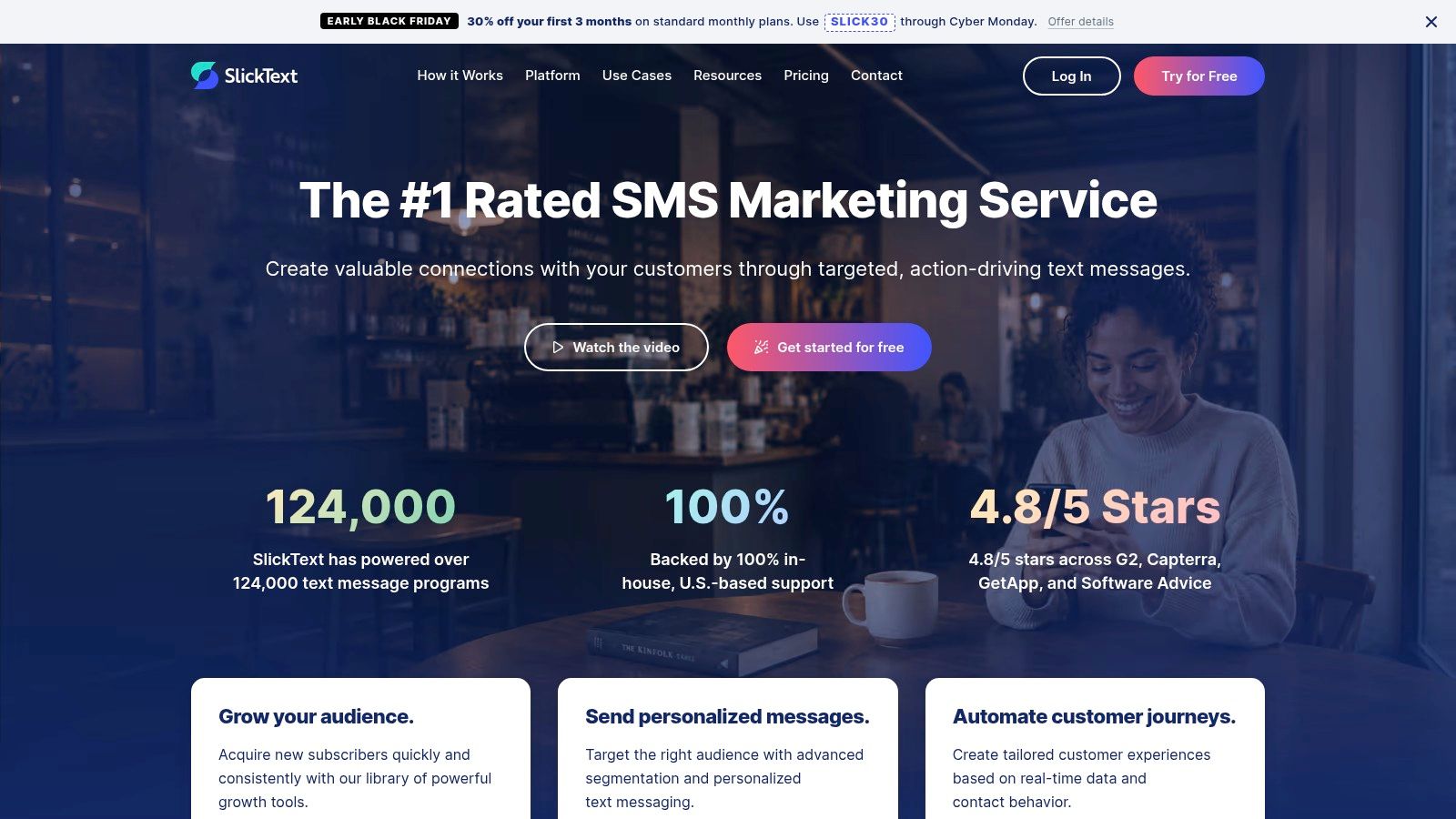
$29 per month for 500 credits with unlimited contacts on the entry plan is the cleanest budget line on this list, which makes SlickText worth a look for businesses that don't need an email-and-SMS suite. SlickText also lists a free trial on the same pricing page.
Features
- Credit-based plans: monthly allowances that set the sending ceiling.
- Unlimited contacts: list size doesn't drive the entry price.
- Rollover credits and free incoming texts: a slow month doesn't waste the whole allowance.
- Support: live phone, chat and email on paid plans.
Pros: published entry pricing makes budgeting simple, contacts are unlimited on the listed plan, and support runs across three channels. Cons: message volume is capped by credits, the entry plan excludes one-to-one onboarding and a dedicated customer success manager, and number, carrier and overage terms still decide the final invoice.
7 SMS marketing platforms compared on published pricing and fit
Pick the row by situation first, then read the price as the platform entry line rather than the whole bill.
| Platform | Best for | Published starting price | Free plan or trial | Channels covered |
|---|---|---|---|---|
| Klaviyo | Ecommerce teams coordinating SMS with email and customer data | Email plan from $20/month; mobile messaging priced by plan and usage | Free plan with limited mobile messaging | SMS, email |
| Attentive | Established brands needing multichannel messaging and strategic support | Custom, usage-based pricing | Not specified | SMS, MMS, RCS, email, push |
| Postscript | Shopify-oriented ecommerce stores | Starter: $0/month platform fee with a $49 monthly minimum spend | $0 platform-fee Starter plan | SMS |
| Omnisend | Ecommerce teams combining SMS and email workflows | SMS from $0.009 per message in the U.S. | Not specified | SMS, email |
| SimpleTexting | Standalone campaign texting and two-way messaging | 500 credits for $29/month; local number costs extra | Not specified | SMS, MMS |
| EZ Texting | Small businesses sending group announcements and promotions | Launch: $25/month | Trial available | SMS, MMS |
| SlickText | Focused SMS campaigns with a published entry plan | 500 credits for $29/month | Free trial | SMS |
Carrier pass-through fees, number or registration costs, MMS and overage sit above these entry points, so compare credits or message units before comparing plan names.
How to Choose and What It Will Really Cost
Match the platform to the job. Klaviyo for ecommerce teams that want SMS and email on one customer profile, Postscript for Shopify stores that will spend past the $49 minimum anyway, Attentive for established brands that want onboarding and strategic support attached to a contract, Omnisend for stores running email and SMS in one workflow, SimpleTexting or SlickText for standalone campaign texting on a fixed monthly budget, and EZ Texting for plain group messaging with private replies.
The payoff is real but conditional. A 2023 Forrester Consulting total economic impact study commissioned by Twilio modeled 132% return on investment over three years for a composite organization, with SMS marketing opt-in rates rising from 30% to 40% and conversion reaching 5% by year three, per Twilio's TEI summary. A modeled composite is directional evidence, not a forecast for your list.
Budget by segment, not by campaign. Twilio's U.S. SMS pricing lists a base rate of $0.0083 per standard outbound or inbound segment, checked November 2026, plus carrier fees of $0.0035 for AT&T, $0.0045 for T-Mobile and $0.005 for Verizon. A 200-character message is two segments, so it bills twice.
- Add the carrier fee first. Platform rates exclude per-message carrier surcharges, so the advertised price is never the delivered price.
- Count numbers and registration. Local numbers carry monthly fees at several vendors, plus one-time registration charges.
- Check rollover and overage. Unused credits expire at some vendors, and per-credit overage rates vary widely.
- Model destination and format. Unit multipliers for Canada and for MMS change the per-message price before any volume discount.
- Demand the denominators. Ask for unique clicks, conversion events, attribution windows and opt-out rates in exportable reports.
Prices change and terms differ by market. Corrections, price changes and category requests go to editorial@toptooladvisor.com.
Run one real campaign through the shortlist before signing an annual term. Build the same 500-message send in SimpleTexting and SlickText, add the local number charge and the carrier registration fee, then price the identical audience in Klaviyo and Omnisend including the segment multiplier for a two-part message. The platform that wins on that arithmetic, not on the features page, is the one worth keeping.
Questions or corrections: editorial@toptooladvisor.com