Guide · General
Best Marketing Automation for Ecommerce Tools in 2026
Compare marketing automation for ecommerce tools by store fit, setup effort and vendor-published prices, with scores and check dates for each.
By the TopToolAdvisor research desk · Updated November 23, 2026 · 14 min read
A shopper adds a coat to the cart on a Tuesday night, gets distracted, and leaves. The recovery email lands the next morning from a newsletter tool that knows the shopper's email address and nothing else. No product image, no cart value, no link back to the saved cart, and no way to stop the message if the order already went through on a phone an hour later.
That isn't a copy problem. The tool never received the cart event, so it has nothing to say. Baymard Institute's cart abandonment research puts the running average at roughly 7 in 10 carts abandoned before purchase, calculated as an unweighted average of 50 studies published from 2006 through 2025. The same research found 42% of US online shoppers in its latest study abandoned a cart because they were only browsing or weren't ready to buy.
Welcome, browse abandonment, post-purchase and replenishment flows all depend on a trigger that carries real data. Whether a tool can fire those triggers depends on how it connects to the store, and that connection is the first thing to check.
This list sorts ten marketing automation for ecommerce tools by store platform and workflow depth rather than one overall ranking. Native Shopify tools sit beside cross-platform journey builders, and every entry flags whether a store integration is needed before a flow can trigger at all. Scoring follows one published method across the directory: features 35%, ease of use 35% and value 30%, with prices quoted from vendor pages and the date checked.
Table of Contents
- 1. Klaviyo Review, Scored on Features, Ease of Use and Value
- 2. Klaviyo for Stores That Want Flows, Segments and Testing in One Place
- 3. Omnisend for Small Stores That Want Prebuilt Ecommerce Workflows
- 4. Drip for Brands Building Behavior-Based Journeys
- 5. Brevo for Teams That Want Email, SMS and WhatsApp on One Bill
- 6. GetResponse for Stores That Also Want Landing Pages and Funnels
- 7. Mailchimp for Teams Already Working Inside It
- 8. Shopify Messaging for Stores That Want Native Flows First
- 9. ActiveCampaign for Detailed Cart Logic and CRM in One Tool
- 10. Customer.io for Event-Driven Teams With Technical Support
- Marketing automation tools for ecommerce at a glance
- Match the Tool to Your Store Before You Commit
1. Klaviyo Review, Scored on Features, Ease of Use and Value
Best for: ecommerce teams that want to see how Klaviyo ranks against nine other platforms under one scoring method before starting a trial.
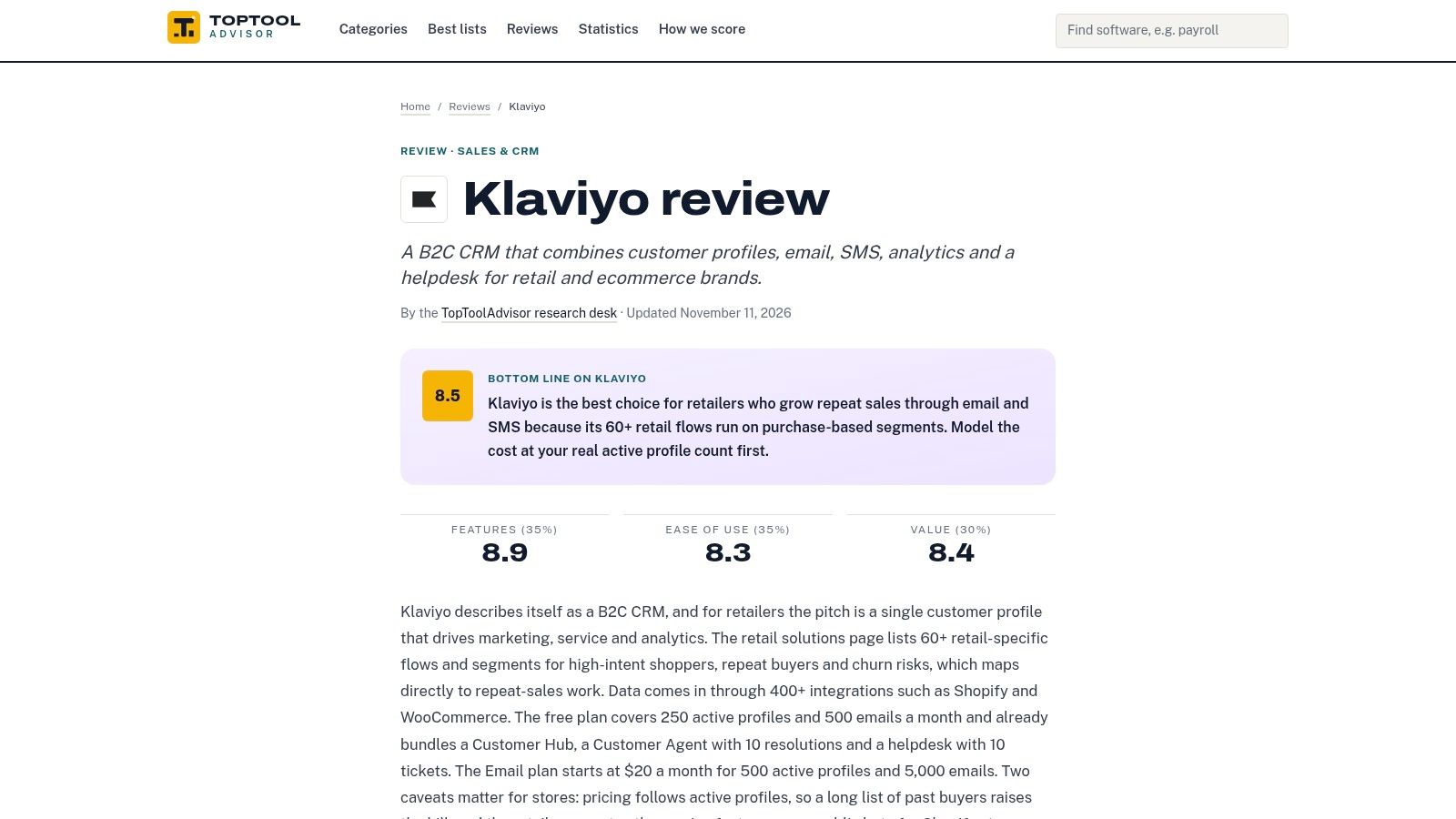
The Klaviyo review on TopToolAdvisor applies the same three weights the directory uses everywhere: features 35%, ease of use 35% and value 30%. That consistency matters more than the number at the top of the page. A store weighing Klaviyo against Shopify Messaging or Brevo can put the three profiles side by side and know the ranking was recomputed from identical weights, not from an impression formed in a 20-minute demo.
Klaviyo is an email and SMS platform built around store data, so a features score is really a judgement about flows, segmentation and reporting on customer and revenue data. An ease-of-use score covers the work between connecting the store and watching the first abandoned-cart email land.
What a score cannot tell you
Cost per profile. Value scored at 30% still can't predict a bill that moves with active profiles and monthly sends. Read the score, then open the vendor's pricing calculator with the store's real list size and a realistic sending month.
Buying rule: Treat a directory score as a filter, not a verdict. Two tools a few points apart usually differ far more in setup effort than in capability.
One detail belongs in any Klaviyo trial: confirm the store connection passes cart and order events with product detail, not just subscriber signups. Without that payload, the flow has nothing to personalize.
2. Klaviyo for Stores That Want Flows, Segments and Testing in One Place
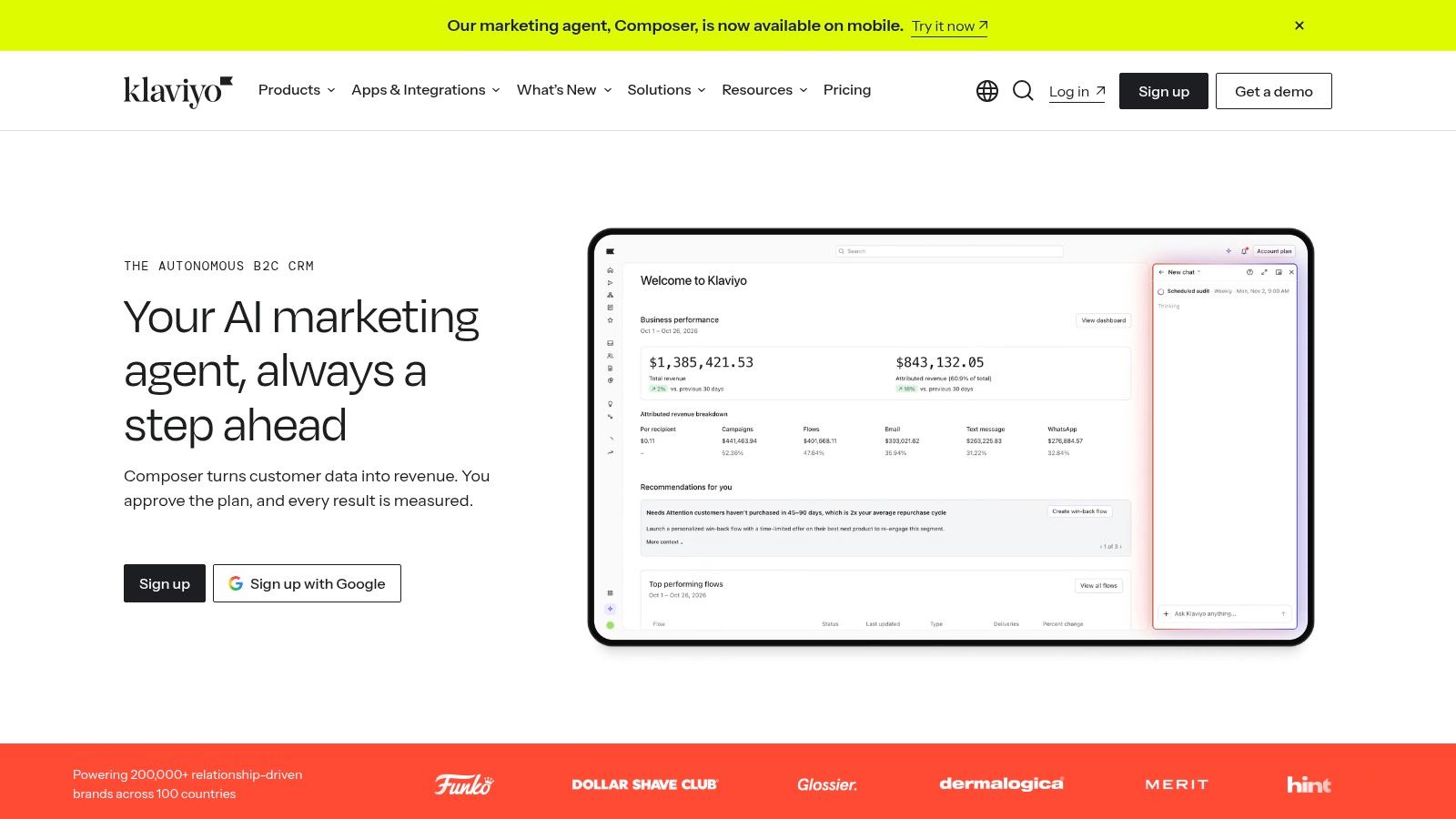
Best for: Shopify, WooCommerce, BigCommerce and Wix stores with a few hundred active profiles that want behavior-triggered email and SMS in one dashboard.
This one needs a store integration. Klaviyo can't fire a cart flow until the connection is live and passing cart and order events with product detail.
Cost, checked January 22, 2026: the vendor's pricing page lists a free tier for up to 250 active profiles and 500 email sends per month. The paid Email plan starts at $20 per month for up to 500 active profiles and 5,000 emails per month (Klaviyo pricing, checked January 22, 2026). Campaigns, flows, segmentation and A/B testing appear as included capabilities on paid plans.
SMS and MMS are an add-on with their own usage costs, and the free tier carries $5 of mobile-message credit per month. That split matters. The bill follows active profiles and monthly sends, so a list built up by seasonal promotions raises two numbers at once.
Workflow depth: welcome, browse abandonment, cart abandonment, post-purchase and win-back, with segments built on purchase history and predicted value.
Setup effort: moderate. Domain authentication, catalog mapping for product blocks, and suppression rules for recent buyers take an afternoon before the first flow goes live.
3. Omnisend for Small Stores That Want Prebuilt Ecommerce Workflows
Best for: small and midsize stores on Shopify, WooCommerce or BigCommerce that want welcome, cart and post-purchase flows running this week rather than configured from a blank canvas.
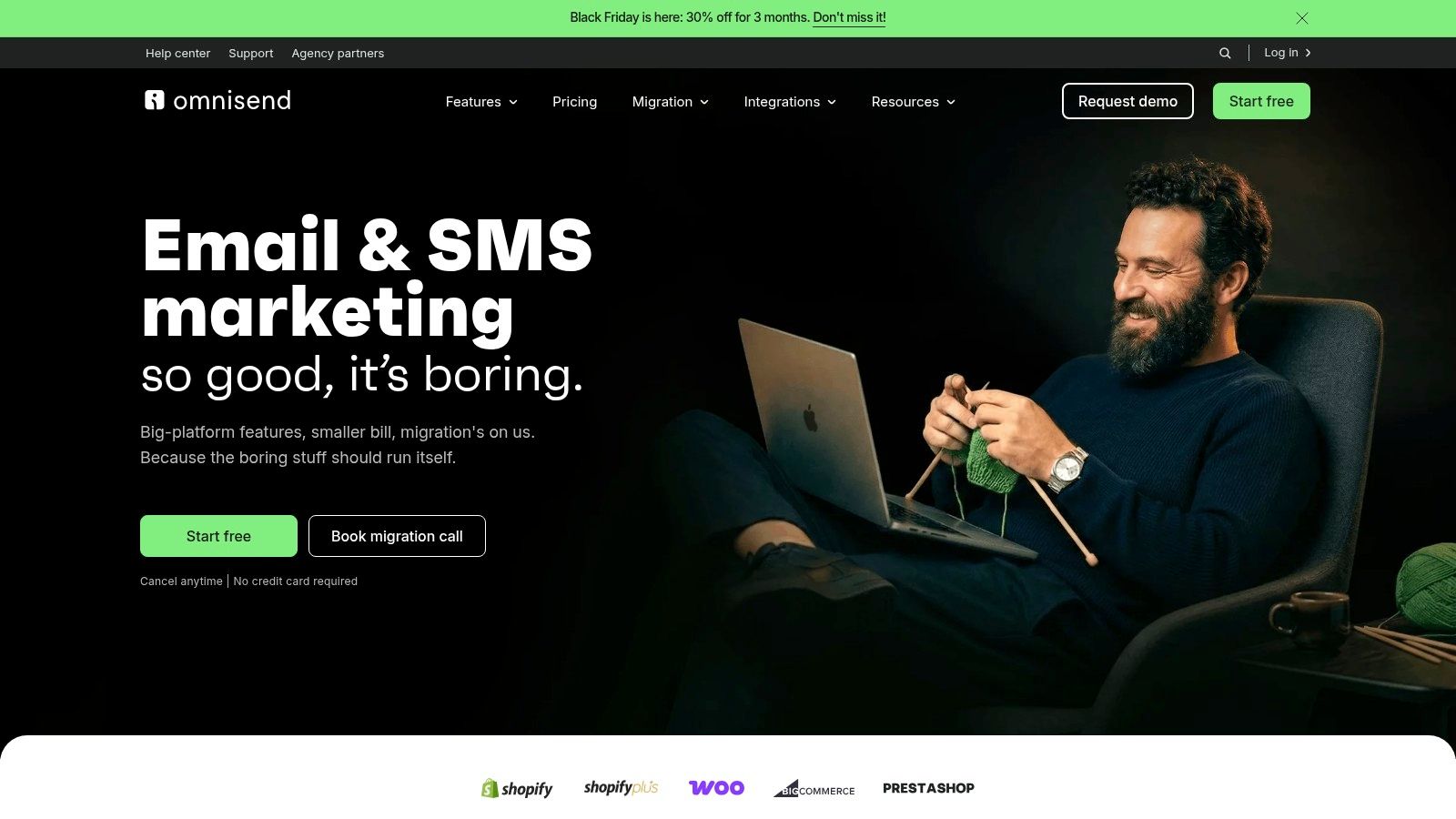
Omnisend ships prebuilt store workflows alongside a custom automation builder, with email, SMS and web push in one account. Segmentation, signup forms, pop-ups and landing pages are part of the product, and vendor materials list migration help and support access, including on the free tier. A store integration is required for cart and order events, so budget an afternoon for connecting the store and verifying that product-view tracking fires.
Why prebuilt flows matter more than custom ones at this size: Omnisend's 2025 ecommerce marketing report, based on nearly 24 billion emails, found automated emails generated 37% of sales while representing only 2% of email volume (Omnisend's ecommerce marketing report). A store with no flows leaves that share unclaimed, and templates shorten the path to the first send.
Free-plan contact and sending limits apply. SMS availability and rates vary by plan, country and volume, so check both before building a cart flow that leans on text messages.
The best email marketing software for ecommerce shortlist covers how the inbox-first platforms compare on the same three scores.
4. Drip for Brands Building Behavior-Based Journeys
Best for: Shopify, BigCommerce and WooCommerce stores with several product lines and repeat buyers. Drip's visual builder uses shopping behavior to trigger journeys, while dynamic content blocks and revenue dashboards help teams tailor campaigns and track results.
A store integration is needed before cart and order activity can trigger flows. Once connected, teams can build behavior-based journeys without relying on custom event data from a developer. Drip is more suited to this work than a basic newsletter tool, though its audience-size and email-volume pricing can make costs rise as a list grows.
Journey performance depends on who enters a flow and what happens next. Qualify the audience, suppress messages when they no longer fit, and recommend products based on the shopper's activity.
- Qualify the audience: Exclude recent purchasers and customers with an open support thread so they do not receive an ill-timed promotion.
- Branch on cart value: Give a high-value cart a different message and wait time from a single low-cost item.
- Cap frequency: Set a limit so shoppers who ignore a cart sequence do not keep receiving the same messages.
Drip is paid after a trial, and pricing follows audience size and email volume. Check how those costs would change if your list grows during a busy season.
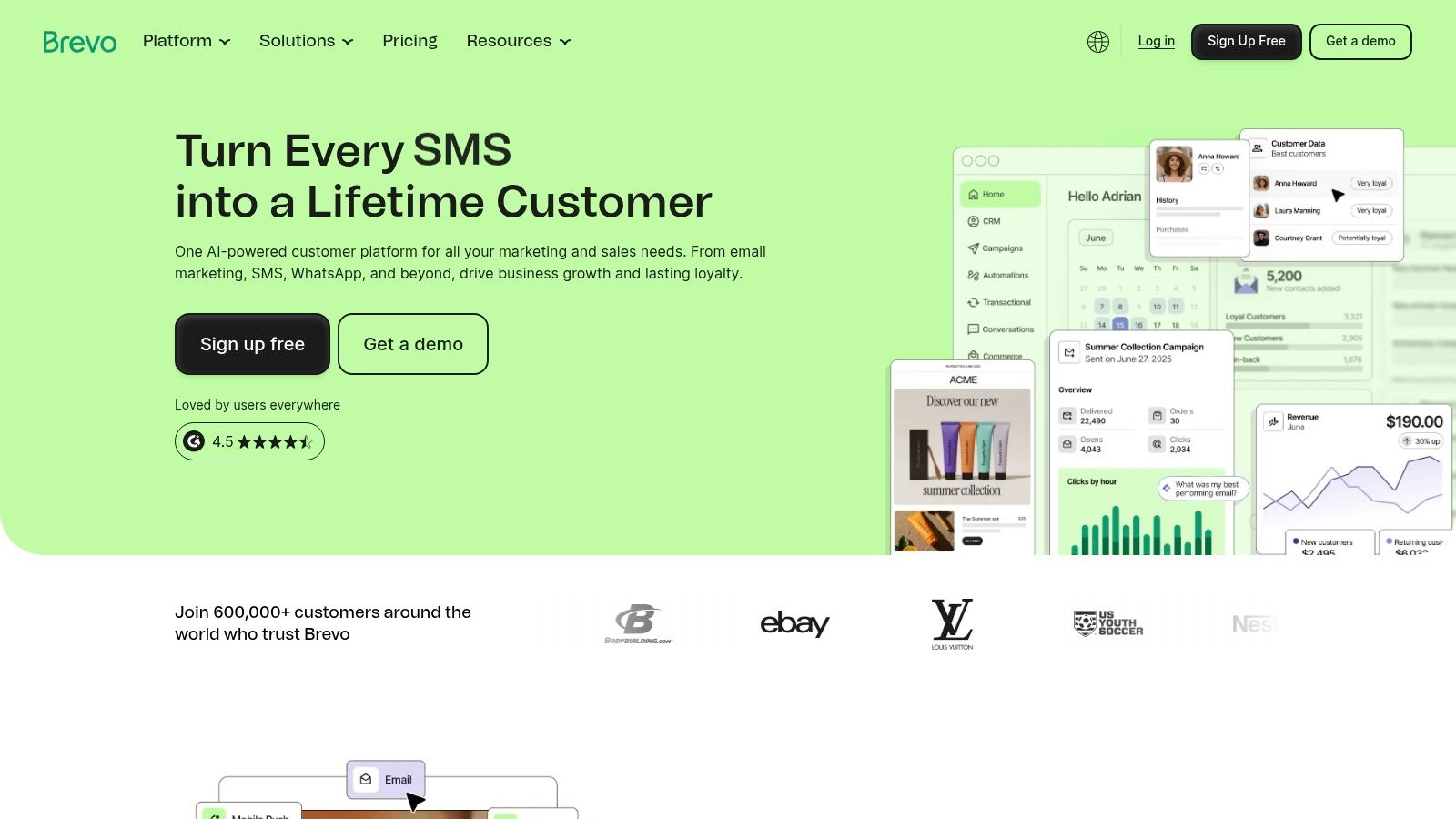
5. Brevo for Teams That Want Email, SMS and WhatsApp on One Bill
Best for: small teams on WooCommerce, Shopify or PrestaShop that want one vendor for email, SMS and WhatsApp and accept less ecommerce depth than a store-only platform.
Brevo bundles campaigns, multi-step automation, website and event tracking. Product recommendations and back-in-stock alerts sit on higher tiers, so the entry plan buys messaging rather than ecommerce flows. Check the tier against the flow before migrating a list. A store integration is needed for cart and order events, and SMS and WhatsApp may carry separate costs or plan requirements.
The case for building flows before buying volume is settled. Automated email represented 2% of email volume and generated 30% of email-attributed revenue in a 2025 analysis of ecommerce activity, averaging $2.87 per automated send against $0.18 for scheduled campaigns (Shopify's email marketing statistics roundup).
Volume is the cheapest thing to buy and the least likely to move revenue. Build the trigger first, then buy sends to fit it.
A free plan covers initial testing, and the Standard plan includes automation with unlimited contacts per the vendor. The practical trade-off is depth: Brevo will run a welcome series and a cart reminder, but it won't give a large catalog the recommendation logic a store-only platform builds in. Teams that need the structure behind triggers, conditions and timing can start with this marketing automation tool explainer.
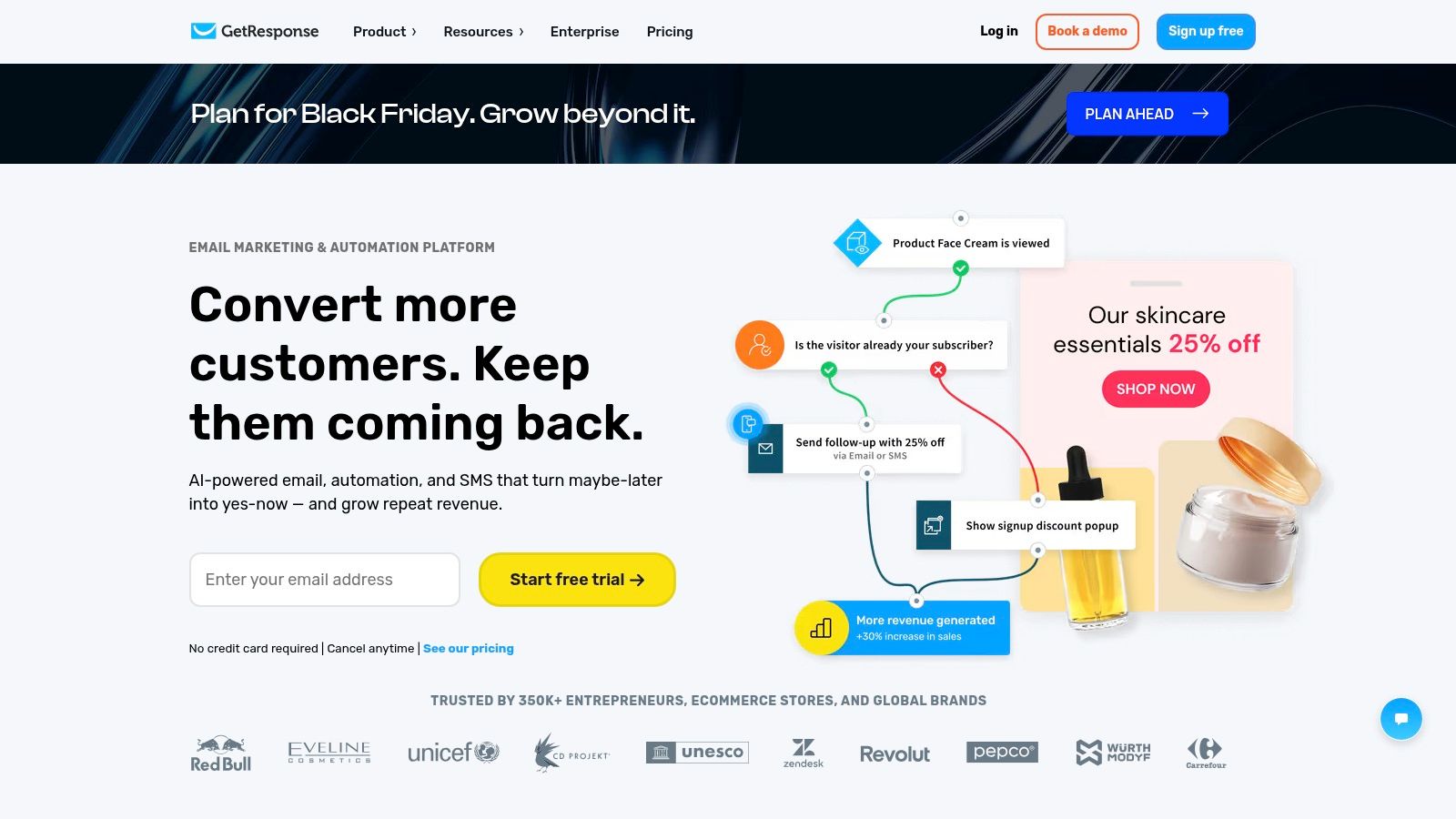
6. GetResponse for Stores That Also Want Landing Pages and Funnels
Best for: stores that buy traffic to landing pages and want email automation, forms, funnels and web push in the same account.
Ecommerce features split by tier. Abandoned-cart recovery and product recommendations sit on the Marketer plan, while the cheapest Starter tier allows a single custom automation workflow. One workflow can't cover welcome, cart and post-purchase at the same time, so price the plan you need. A store integration is required, and those ecommerce settings live in a separate panel from the general automation builder.
Personalization is where the category is heading. A 2023 ecommerce statistics compilation reported that 80% of businesses viewed marketing personalization as important for increasing customer spending and 62% linked it to customer retention, and it projected the customer-experience personalization software market growing from $1.16 billion in 2023 to roughly $5.16 billion by 2030 (Printify's ecommerce statistics). Treat the growth figure as a projection from a market estimate, not a forecast of any store's results.
What the plan buys: unlimited monthly email sends on standard plans, landing pages, signup forms and revenue reporting. What to watch: bundled features a pure email operation won't use, and a Starter tier that undercuts the automation the store needs.
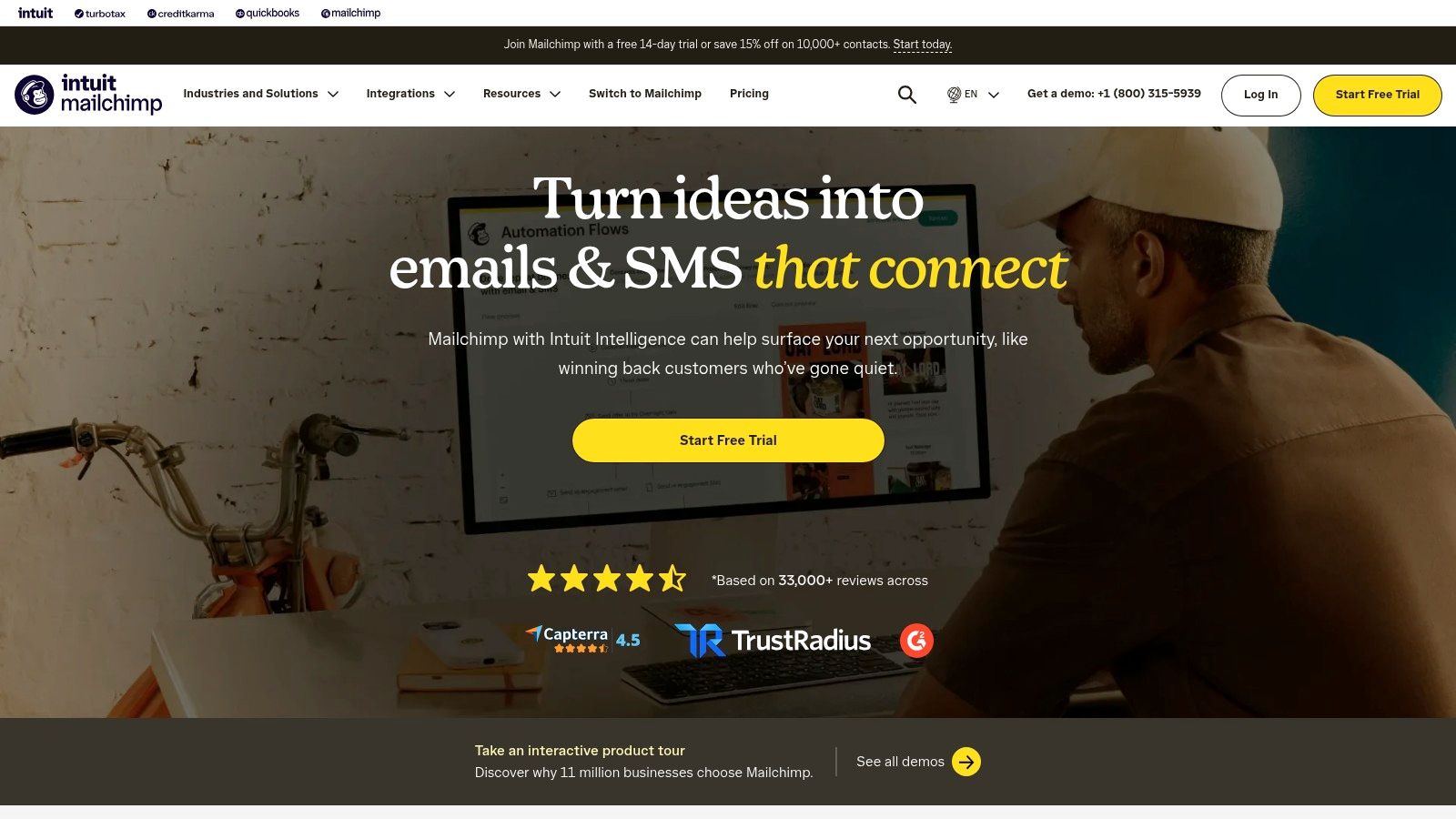
7. Mailchimp for Teams Already Working Inside It
Best for: businesses whose marketing runs on campaigns, content and a contact list first, with ecommerce as one channel among several.
Mailchimp handles scheduled campaigns and automated flows, with templates, a flow builder, ecommerce integrations and customer data in one account. It's a general-purpose platform, and that shows in how flows are assembled: you start from journeys and templates instead of wiring event logic field by field. A store integration is needed for cart and order triggers, and automation features vary by plan.
The benchmark case for switching emphasis from broadcasts to flows is strong. Triggered lifecycle messages beat one-off campaigns across benchmark data covering more than 27,000 brands and over 20 billion campaign emails, where automated messages converted at 1.49% against 0.08% for scheduled campaigns, with roughly 18 to 22 times higher revenue per email (Stripo's email automation benchmarks).
That's the argument for building three flows before adding a fourth weekly newsletter. Contact and send limits drive the bill as the audience grows, and the entry price rarely survives a list of 20,000 contacts.
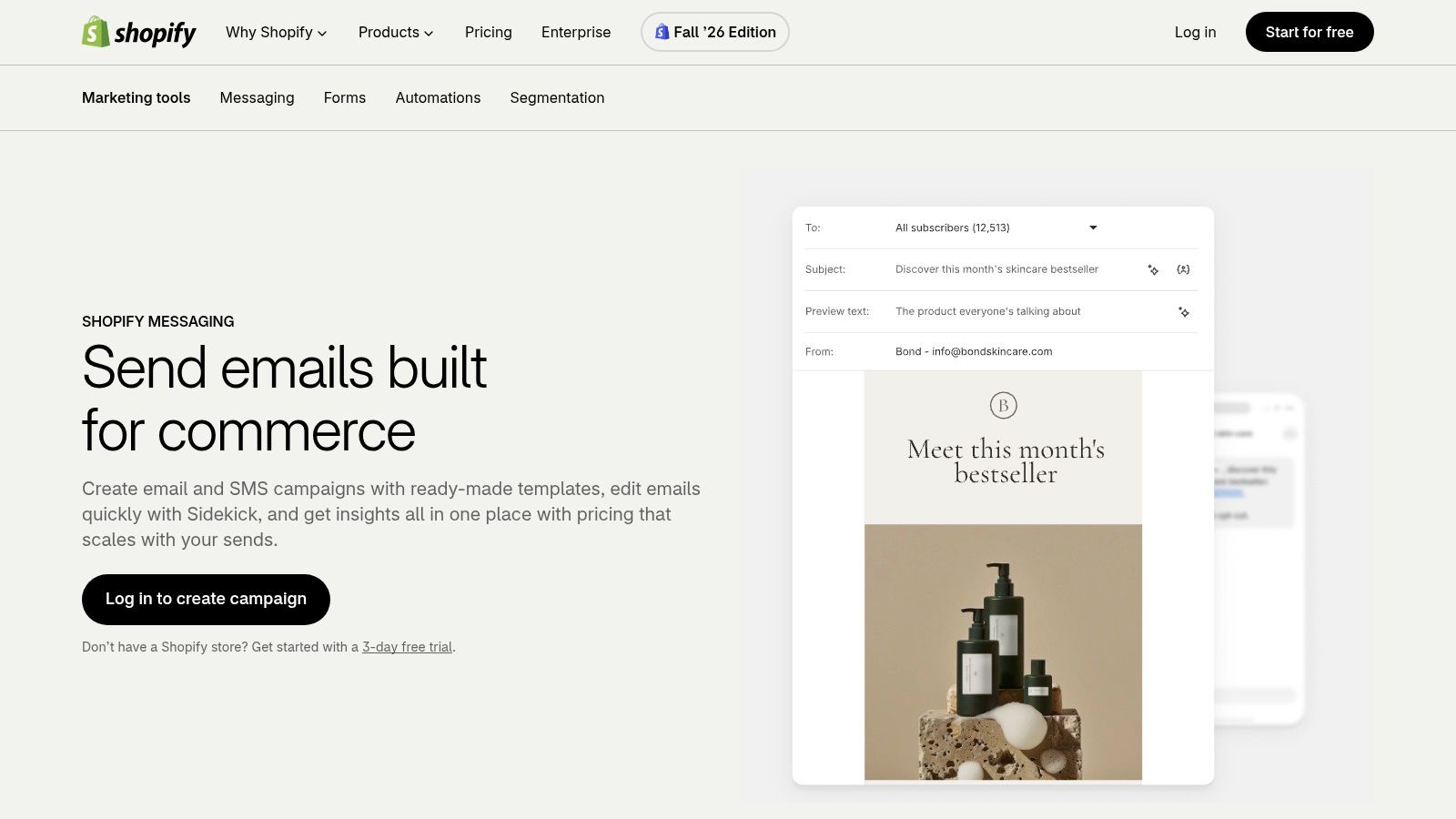
8. Shopify Messaging for Stores That Want Native Flows First
Best for: Shopify stores that want basic email automation tied directly to their storefront, with no separate store connector to set up.
A shopper abandons checkout, and Shopify's native tools can use the store's product and customer data to send a recovery message with product details and a checkout link. Templates cover common store journeys; segmentation and Shopify Forms are also available on eligible plans. Shopify Flow adds branching logic, though it requires installation.
Shopify Email includes a monthly free allowance, then charges according to send volume. SMS and WhatsApp automation are billed separately, based on messages and recipient region.
Native tools suit standard Shopify journeys and reduce the risk of a connector or product feed disrupting triggers. Stores that need journeys spanning multiple platforms may need a dedicated cross-platform builder instead.
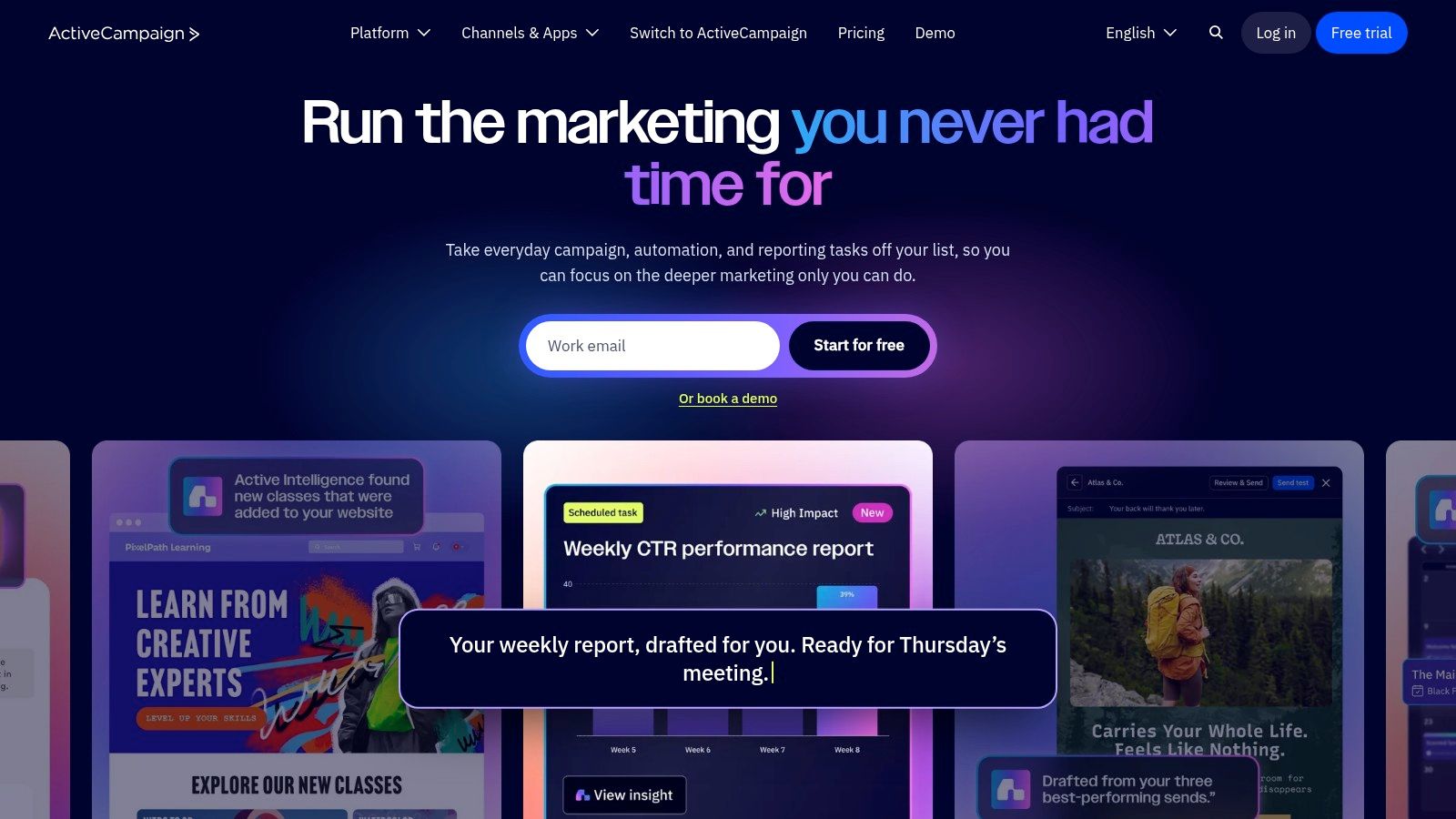
9. ActiveCampaign for Detailed Cart Logic and CRM in One Tool
Best for: stores with varied catalogs, where a cart flow should branch on cart value, product category or past purchases, and where the same team handles sales follow-up.
ActiveCampaign pairs visual automation with CRM contact management and integrations for Shopify and WooCommerce. Cart triggers can carry product details and a return-to-checkout link, and conditions can split on what's in the cart. A supported store integration is required before any of that fires.
One platform limitation changes the timing. On Shopify, cart data syncs once the customer reaches the shipping-information step, so a shopper who abandons on the cart page may never enter the flow. Test with a live cart before committing, and set the first email's delay against the moment the data arrives rather than the moment the cart was created.
Test the trigger with a real cart before you sign. A flow that never fires is a subscription with no output.
Triggered messages carry an outsized share of orders. In Maropost's analysis of November 2024 activity, triggered campaigns such as welcome and cart-reminder messages accounted for 3% of total sends but drove 30% of all email orders (Maropost's email and SMS analysis). Coverage matters more than price here. Public pricing often needs a plan-specific lookup rather than a published list.
10. Customer.io for Event-Driven Teams With Technical Support
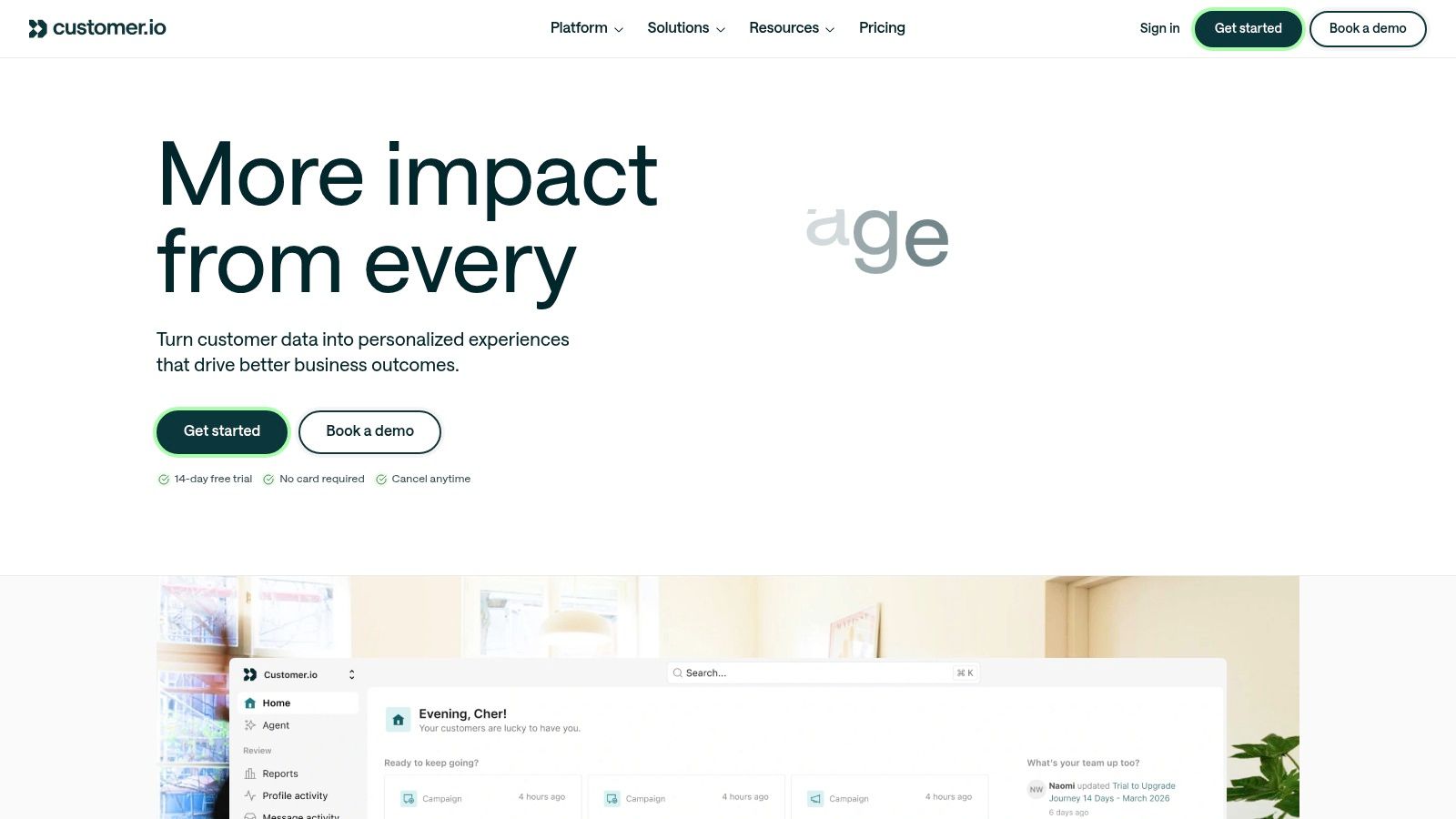
Best for: stores with a data team, a warehouse or a subscription model, where a message should fire from a custom event such as refill due or trial started.
Customer.io builds on events and attributes. A visual workflow builder triggers email, push, in-app, SMS and WhatsApp from whatever the event stream carries, segmentation runs on customer attributes and events, and custom objects let a message reference something other than a product. None of it works without integration work, and usually a developer.
That effort is the decision, and the adoption figures explain why. AI in ecommerce statistics compiled by TechRT report that 35% of organizations have difficulty integrating AI with existing systems and 44% cite implementation cost as the biggest barrier to adoption, while 88% used AI in 2025 and only 7% had scaled it fully. A flexible tool assumes clean identity resolution, deduplicated events and consent states that propagate to every channel.
Cost shape: the starting price sits above entry-level email tools, and profile or SMS overages add to the bill. Setup shape: catalog and order feeds mapped to custom events, a named owner for the event schema, and a documented suppression list.
For the trigger, condition and timing structure behind these flows, the explainer on what is marketing automation is the shorter read before a build.
Marketing automation tools for ecommerce at a glance
The right comparison starts with the store platform and the depth of automation required. Shopify Messaging is native to Shopify; the other tools need a store connection for cart or post-purchase workflows. A free plan or trial can help with initial setup, but check which features it includes.
| Tool | Best for | Free plan or trial | Store integration |
|---|---|---|---|
| Klaviyo | Ecommerce brands building targeted email and SMS flows from customer and shopping data | Free tier for up to 250 profiles | Uses ecommerce customer and shopping data |
| Omnisend | Small and midsize retailers starting with prebuilt ecommerce workflows | Free plan includes core workflows and segmentation, with limits | Prebuilt ecommerce workflows |
| Drip | Online stores building behavior-based customer journeys | 14-day trial | Integrates with Shopify, BigCommerce and WooCommerce |
| Brevo | Smaller businesses managing email, SMS and WhatsApp communications | Free plan available for initial testing | Advanced ecommerce features are on higher plans |
| GetResponse | Businesses combining email automation with landing pages and funnels | Free plan available | Abandoned-cart recovery requires the Marketer plan |
| Mailchimp | Teams already using Mailchimp for campaigns and automated journeys | Free plan available | Ecommerce integrations provide customer data |
| Shopify Messaging | Shopify merchants starting with native email and SMS tools | Up to 10,000 free monthly emails | Native Shopify integration |
| ActiveCampaign | Teams combining detailed automation with CRM capabilities | Free trial available | Supports Shopify, WooCommerce and other store integrations |
| Customer.io | Data-driven teams building event-based customer journeys | Free trial available | Requires an ecommerce integration to use store events in lifecycle flows |
Match the Tool to Your Store Before You Commit
Shortlist no more than two tools, then test each against the store's own catalog, order data and one abandoned-cart flow before signing a plan. A demo runs on sample data. A trial on a real cart shows whether the trigger fires, whether product images resolve from the feed, and whether a buyer who completes the order mid-sequence gets suppressed.
Four checks decide most purchases:
- Store integration first: confirm the connector passes cart, order and product events, not just signups. On Shopify, ask specifically when cart data reaches the platform, since some tools only receive it at the shipping step.
- The billing unit: active profiles, contacts or sends. A tool billed on profiles penalizes list growth; one billed on sends penalizes campaigns. Model both against next year's list.
- SMS as a separate line: text and WhatsApp are usually priced per message and by region, so an email-only budget won't cover a two-channel cart flow.
- Honest attribution: compare flow revenue against a holdout group rather than crediting every order a message touches. A flow that touches a purchase the customer would have made anyway hasn't earned the revenue it reports.
Trust should set the ceiling on how far automation goes. In 2025, 51% of consumers reported using generative AI for online shopping, up from 38% in 2024, yet 30% said they would never allow AI to handle shopping or access payment information, per Stord's state of AI report. The same source found 16% were very comfortable letting AI use payment details, and 21% accepted AI-assisted shopping only if they could review the transaction first. Automate replenishment reminders, recommendations and routine support, and keep pricing and payment decisions visible and reversible.
TopToolAdvisor has no affiliate deals and sells no placement in its rankings, and vendors cannot buy a higher position. Every shortlist compares 8 to 10 products, scores them the same way and quotes the starting price from the vendor's own page with the date checked. Start there this week: pick two candidates, connect one to a single cart flow, run a test order through it, and keep the tool whose trigger fires with the right product data before the first campaign goes out. Price corrections and category requests go to editorial@toptooladvisor.com.
Questions or corrections: editorial@toptooladvisor.com